

Upper Facial Botox

The passage of years, the damaging effects of sun rays, stress, and most importantly, the facial expressions we make unconsciously throughout the day leave permanent marks on our faces. Especially the forehead, the area between the eyebrows, and the area around the eyes, located in the upper part of the face, are the regions where signs of aging and a tired expression appear earliest.
Upper facial Botox, accepted as the gold standard of aesthetic medicine, is a highly effective treatment that erases wrinkles and fine lines in these areas non-surgically, restoring a bright, youthful, and serene expression to your face. With this method, which is the most preferred among non-surgical facial rejuvenation applications, you can reverse the traces of years in minutes.
What is Upper Facial Botox?
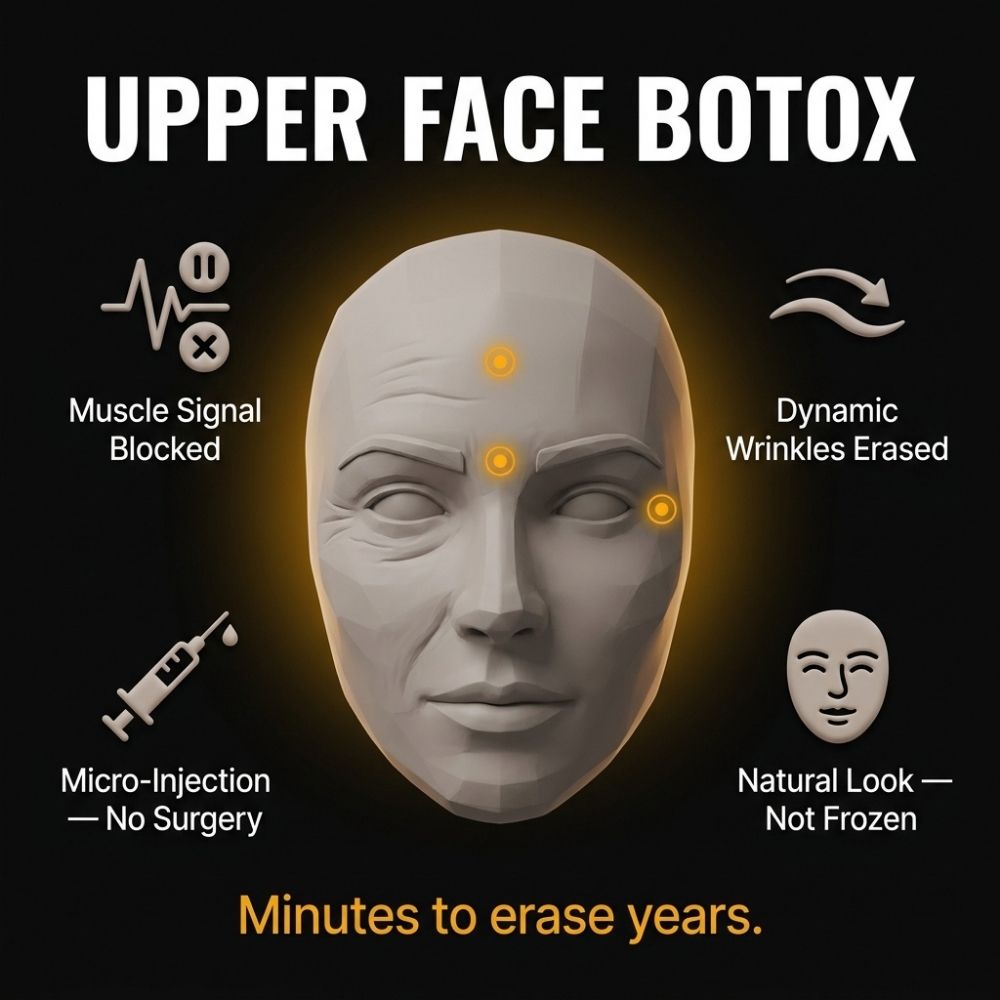
Upper facial Botox is the process of applying a purified protein called botulinum toxin type A to the muscles in the upper part of the face (forehead, between the eyebrows, around the eyes) using the micro-injection method.
This special protein temporarily slows down the communication between the nerves and the overactive mimic muscles that cause wrinkles on the skin. As the muscles relax, the skin tissue above them also smoothes out, and the dynamic wrinkles formed over the years disappear. When performed in the correct doses and in accordance with anatomical plans, it offers you a vibrant, rested, and aesthetic appearance, rather than a frozen expression.
Which Areas is Upper Facial Botox Applied To?
The focus of the application is the core areas that define the characteristic expression of the face:
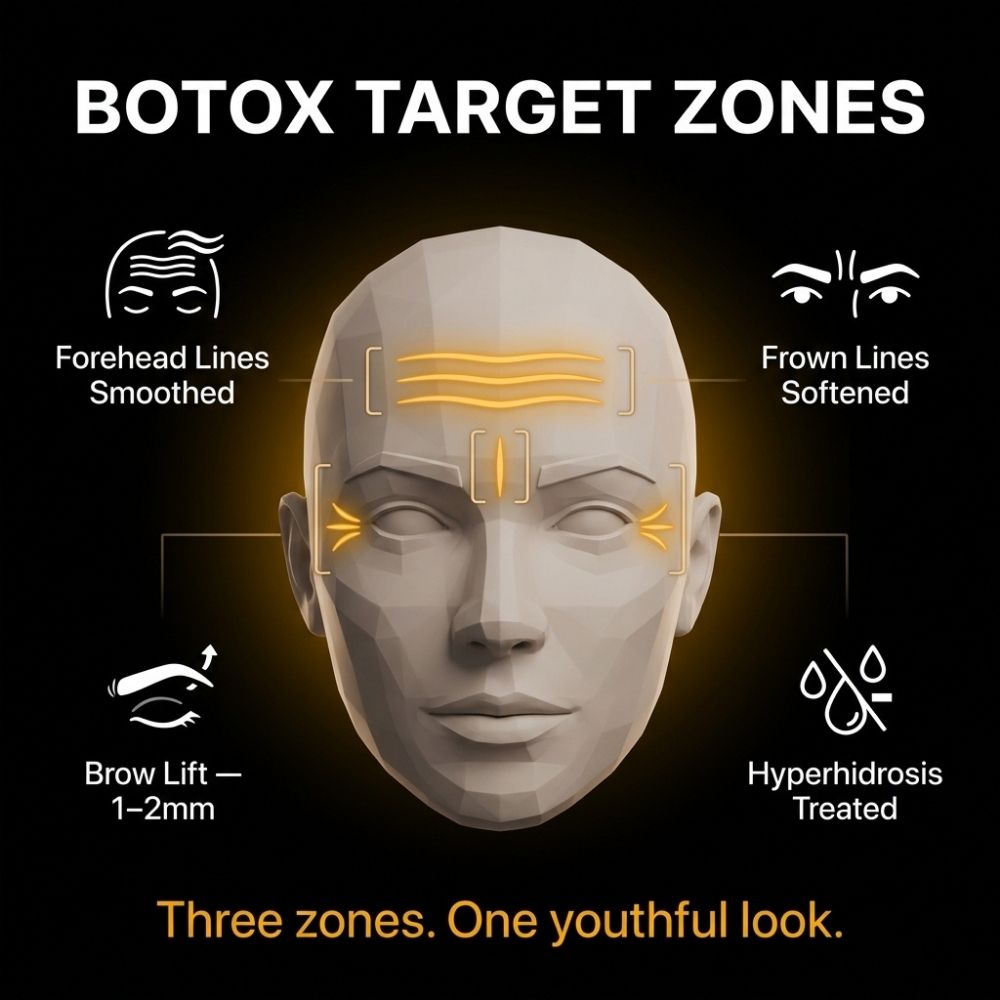
- Frown Lines (Glabellar Lines): These are the vertical deep lines formed between the eyebrows when focusing, feeling angry, or squinting at the sun. Intervention in this area immediately softens that “angry and harsh” expression.
- Forehead Lines (Frontal Lines): These are horizontal lines formed by the movement of raising the eyebrows. By smoothing these lines with forehead Botox, the skin is ensured to achieve a smoother and brighter texture.
- Eye Contour Wrinkles (Crow’s Feet): These are fine lines that become prominent with smiling and squinting movements, radiating outward from the corners of the eyes. Intervention for crow’s feet ensures the gaze is more youthful and energetic.
In Which Situations and Why is Upper Facial Botox Performed?
This procedure is frequently preferred not only to eliminate existing wrinkles but also for preventive aesthetic purposes:
- Wrinkle and Line Treatment: Softening set-in lines and preventing the formation of new wrinkles.
- Eyebrow Lift: Lifting drooping eyebrows that cause hooding on the eyelids by 1-2 millimeters by relaxing only specific muscles, adding freshness to the gaze.
- Asymmetry Correction: Balancing level differences in the eyebrows or the asymmetric use of facial expressions.
- Excessive Sweating (Hyperhidrosis) Treatment: Stopping excessive sweating problems in the scalp or forehead area that affect social life.
How is Upper Facial Botox Performed? How Does the Process Work?
The application should be performed in a clinical setting by doctors experienced in aesthetics and anatomy. The procedure steps are extremely comfortable:
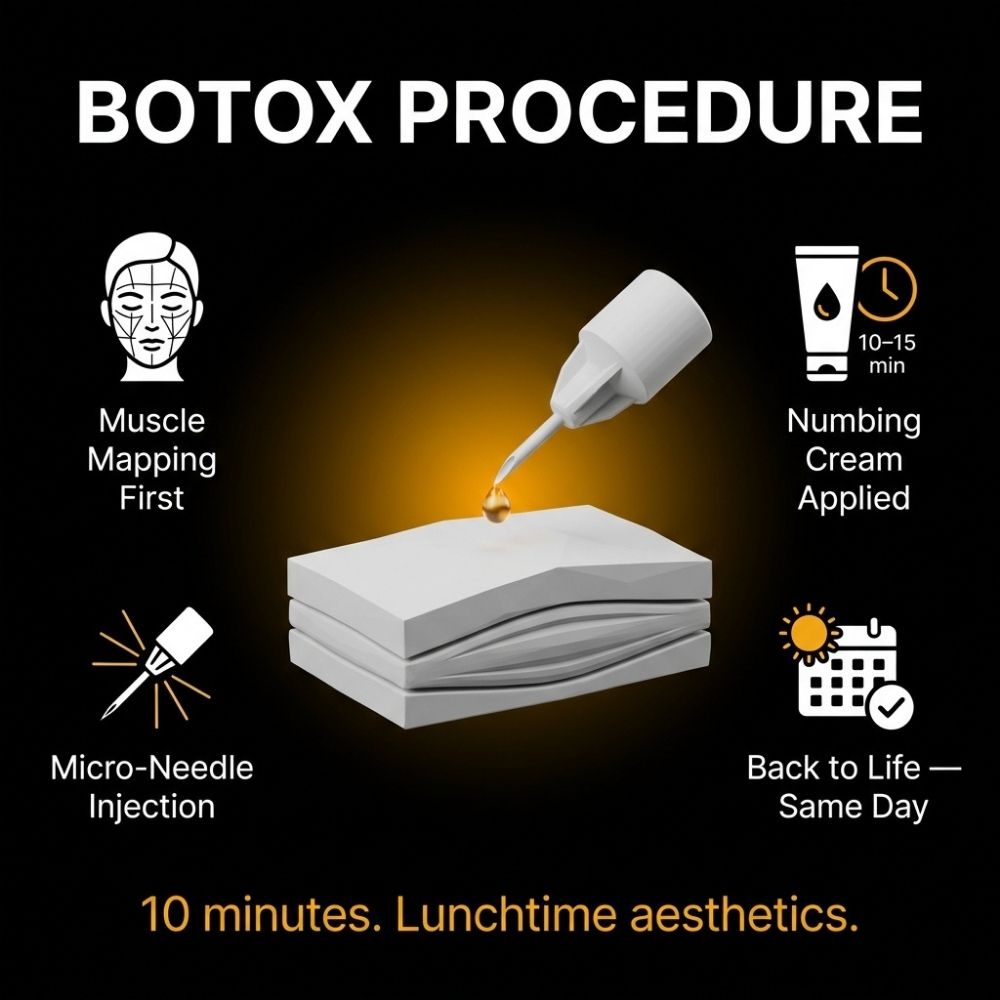
- Evaluation and Planning: Before the procedure, the individual’s medical history, medication use, and expectations are reviewed by the physician. Personalized dosage planning is performed by analyzing the facial muscle structure and the strength of facial expressions.
- Preparation: The injection sites are cleaned, and for the patient’s comfort, a local anesthetic cream is applied to the area and left for 10–15 minutes.
- Application: With the help of special very fine-tipped needles (micro-needles), botulinum toxin is gently injected into the designated target muscles.
- Return to Daily Life: The entire process takes approximately 10–15 minutes. For this reason, it is also known in the literature as “lunchtime aesthetics.” The individual can apply makeup immediately after the procedure and return to daily activities without any restrictions.
Who is it Not Suitable For?
Botox is extremely safe for healthy individuals over the age of 18 with realistic expectations. However, it is not recommended for the following individuals and situations:
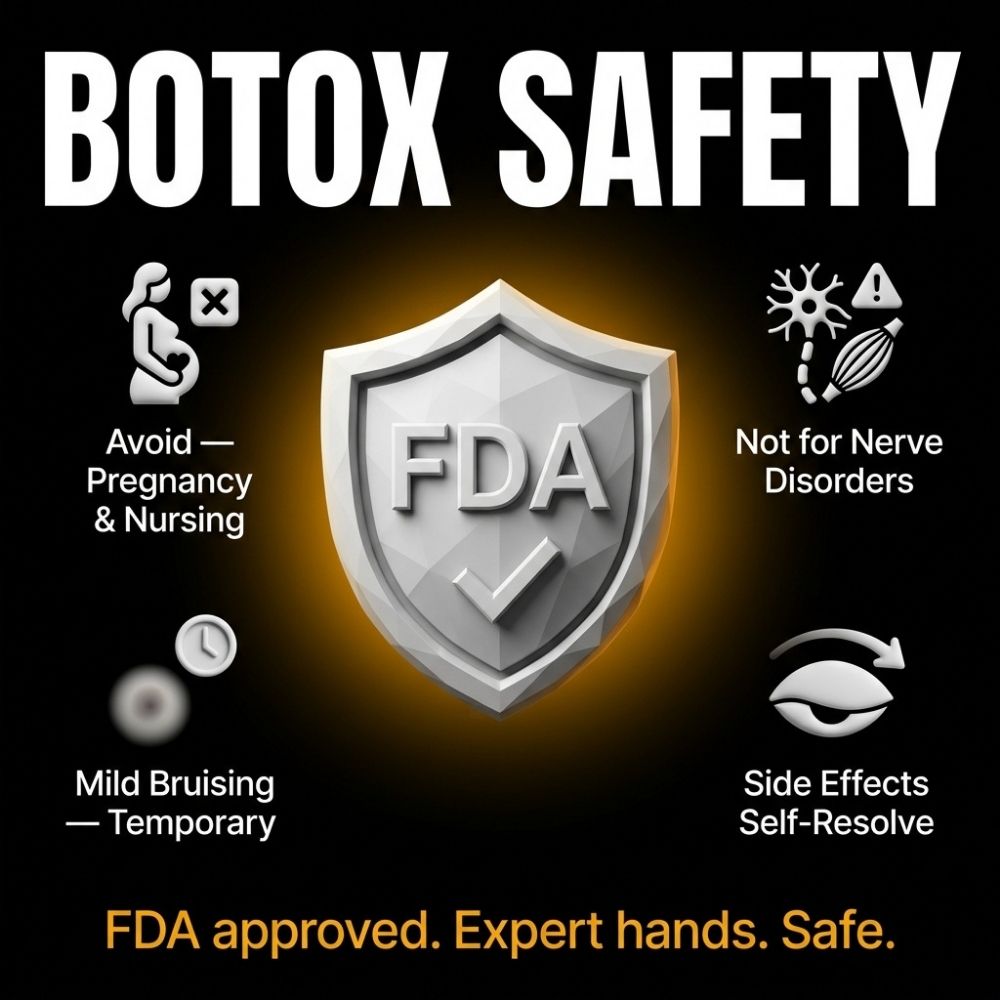
- Pregnant or breastfeeding women (not performed as a precaution as the effects on the baby are not fully known),
- Individuals with an allergy to botulinum toxin or any ingredient in the medication,
- Patients with muscle or nervous system disorders such as Myasthenia Gravis or Lambert-Eaton syndrome,
- Those with an active skin infection (active cold sores, wounds, etc.) in the application area,
- Individuals with bleeding disorders or those using intensive blood thinners who cannot discontinue the medication.
In such special cases, your physician will offer you alternative anti-aging medical aesthetic treatment options.
Does Upper Facial Botox Have Harmful Effects or Side Effects?
Botox, an FDA (U.S. Food and Drug Administration) approved medication, is quite safe when applied by experienced hands and in the correct doses. It has no systemic (affecting the entire body) harmful effects. However, as with any medical procedure, temporary side effects may occur, albeit rarely:
- Mild and temporary redness or bruising at the injection sites.
- A mild headache that appears on the day of the procedure and passes quickly.Temporary eyelid drooping (Ptosis) or asymmetrical (surprised) facial expressions in case of application to the wrong muscle groups or excessive dosage (in inexperienced hands).
- In rare cases, mild eye or mouth dryness.
None of these side effects are permanent; they disappear completely on their own as the effect of the medication diminishes.
Frequently Asked Questions (FAQ)
We have gathered the most frequently asked questions about the treatment and the topics our patients are most curious about for you:
How long does upper face Botox last?
The effects of upper face Botox (treating the forehead, frown lines, and crow’s feet) typically last between 3 to 6 months. The longevity of the results depends on individual factors such as metabolism, muscle strength, and the dosage administered. With regular treatments, the results may last longer as the muscles are trained to remain in a relaxed state for extended periods.
How long does it take for Botox to start working?
The effects of Botox are not immediate. While you may begin to notice changes within 2 to 4 days, it typically takes 10 to 14 days for the treatment to take full effect and for the muscles to relax completely. It is best to wait the full two weeks before assessing your final results or scheduling a follow-up (touch-up) appointment.
Is Botox painful?
Botox injections are generally not considered painful. Most patients describe the sensation as a minor pinprick or a quick pinch. The procedure uses extremely fine needles and only takes a few minutes to complete. For patients with a low pain threshold, a topical numbing cream can be applied before the treatment to ensure maximum comfort.
Will Botox make me look frozen?
No, when administered by a qualified professional in the correct dosage, Botox will not result in a ‘frozen’ or expressionless look. The goal of treatment is to soften the overactive muscles that cause wrinkles, not to paralyze your entire face. A successful application ensures a natural-looking, refreshed appearance where you can still smile, frown, and show emotions comfortably.
What should I avoid after Botox?
To ensure the best results and prevent the toxin from spreading to unintended muscles, please follow these post-treatment guidelines:
- Do not lie down for at least 4 hours after the procedure.
- Avoid rubbing or massaging the treated area for 24 hours.
- Refrain from strenuous exercise and excessive heat (saunas, hot tubs, or steam rooms) for the first 24 to 48 hours.
- Avoid alcohol consumption and blood-thinning supplements for 24 hours to minimize the risk of bruising.

Op. Dr. ALİ OĞUZ DEMİR
Otolaryngologist (ENT Specialist)
Following his specialization training, Dr. Ali Oğuz Demir has performed over 500 rhinoplasty surgeries. He holds a National Certificate of Professional Competence, has completed theoretical and practical training at the School of Facial Plastic Surgery, and has international clinical and observational experience from Dr. Yves Saban’s clinic in France.
Take the First Step for a New Beginning!
Clinic Address:
Contact Us
Achieve a Rested, Renewed Face with Natural Expressions
The decision for non-surgical facial rejuvenation is one of the best investments you can make in yourself to feel happier with your reflection in the mirror. Meet our expert team to leave behind the lines that make you look more tired, stressed, or older than you are, and to step into a much smoother, fresher appearance within minutes. You can contact our clinic and schedule a consultation appointment to answer all your questions and create your personalized treatment plan. We are here to help you and support you throughout this exciting process!