


Adenoid and Tonsil Diseases

Tonsil and adenoid problems, which directly affect upper respiratory tract health in every age group, especially during childhood, can lead not only to recurring throat infections but also to growth retardation, poor quality sleep, and permanent deformities in the jaw structure.
These lymphoid tissues, which serve as part of our body’s defense system, can sometimes lose their protective properties and turn into infection centers themselves, or they can grow excessively and obstruct vital airways. In such cases, in order to protect the patient’s quality of life and development, Tonsil (Tonsillectomy) and Adenoid (Adenoidectomy) surgeries are among the most reliable and gratifying surgical solutions offered by modern medicine.
What are Tonsils and Adenoids?
Although these two structures essentially come from the same immune system family, their anatomical locations and structural features are different from each other:
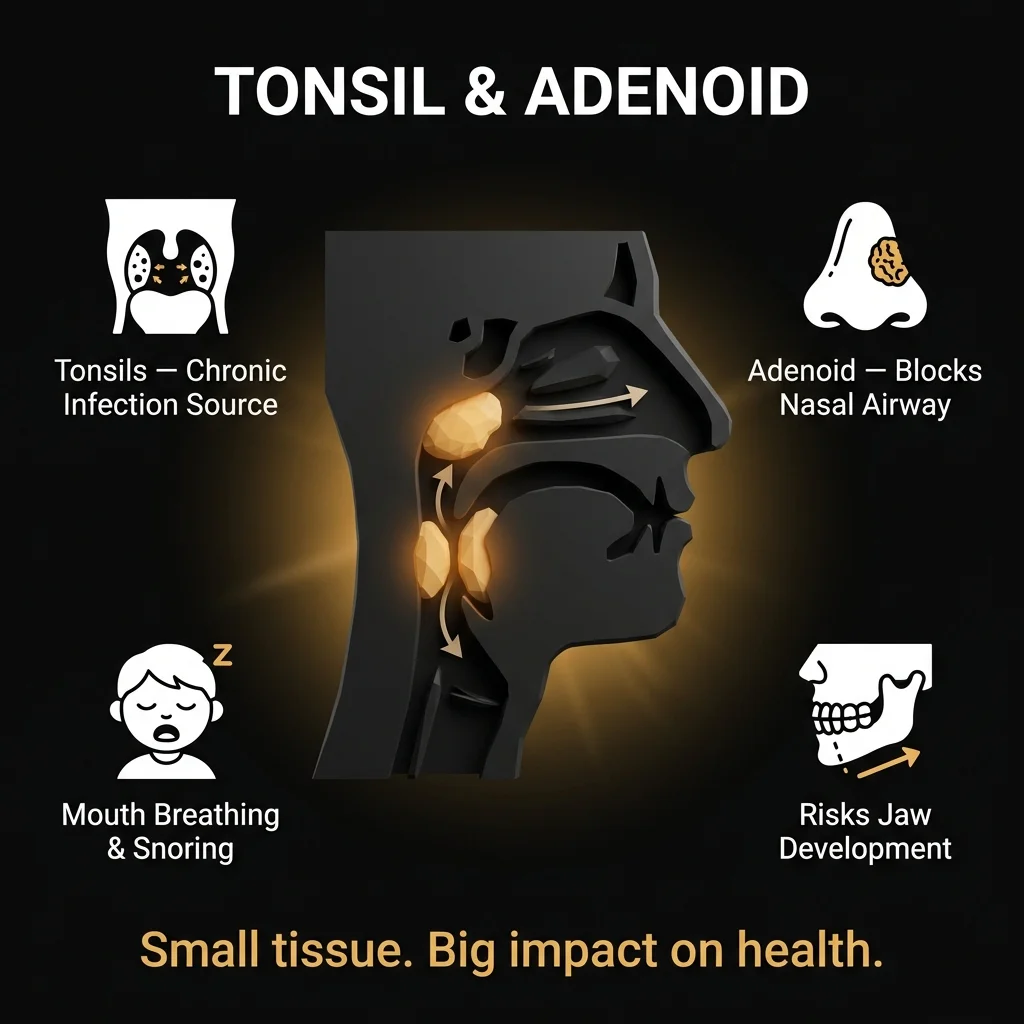
- Tonsils: These are encapsulated lymph tissues located on both sides of the throat, at the back of the base of the tongue. There are small pits called “crypts” on their surfaces. Bacteria and food residues that settle in these crypts cause the tonsils to become a source of chronic infection over time. In cases where body resistance decreases, this leads to recurring acute tonsillitis. Additionally, tonsils that grow excessively due to a reactionary increase in lymph tissue pave the way for serious complaints such as snoring, choking during sleep, and sleep apnea.
- Adenoids: These are located at the very back of the nose, on the roof of the nasal cavity (nasopharynx). Unlike tonsils, they do not have a capsule and do not contain crypts. They generally begin to grow after the age of 1, tend to shrink after the age of 10, and disappear around the age of 13-15. However, frequent infections during the years a child starts daycare or school cause the adenoids to grow rapidly. Enlarged adenoids block the air passages where the nose opens into the throat, causing severe nasal congestion and mouth breathing during sleep.
In Which Situations is Tonsillectomy Required?
The decision for tonsil surgery is determined by very clear boundaries according to international medical criteria. Conditions requiring surgical intervention are divided into two main groups: “infection-based” and “obstruction-based.”
Definitive Surgical Reasons Due to Infection:
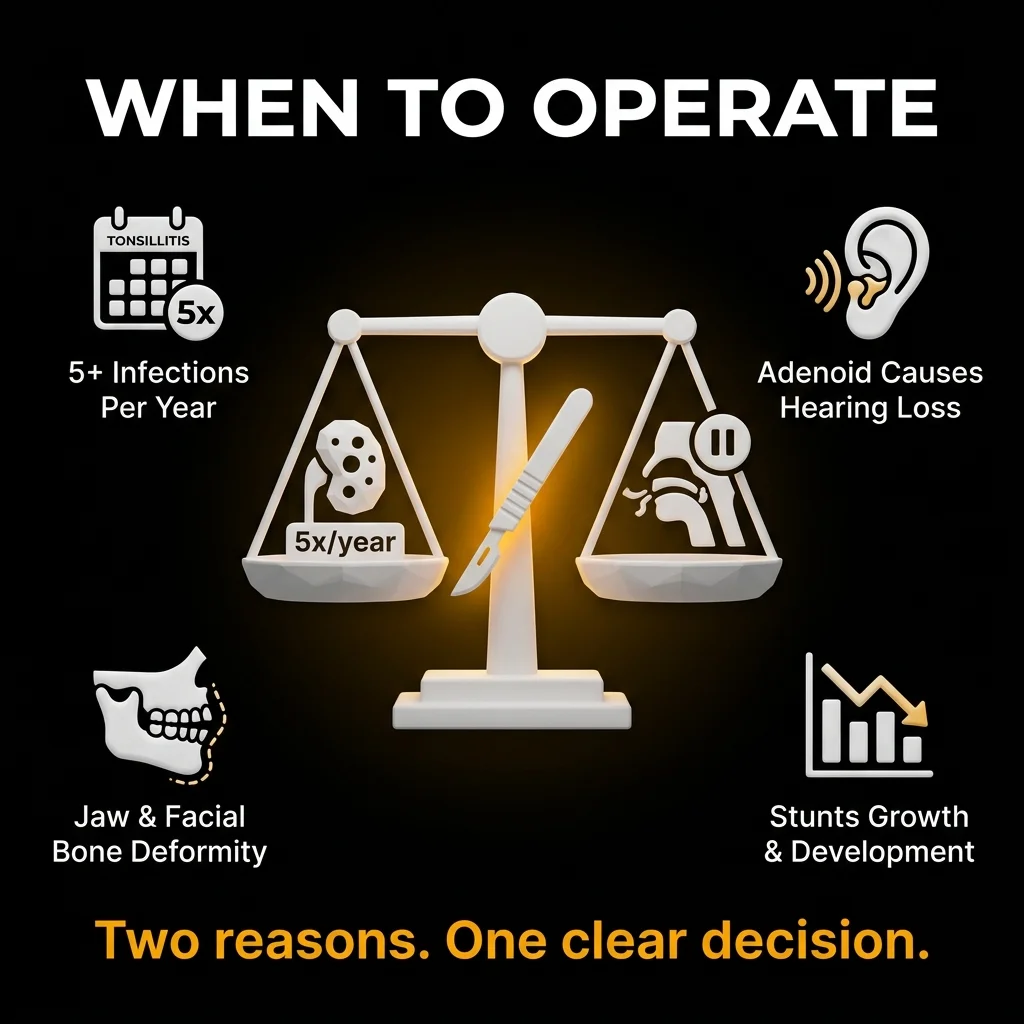
- Recurrent acute tonsillitis: Experiencing more than five severe tonsillitis attacks in a single year, or more than three per year for two consecutive years.
- Risk of heart valve diseases or rheumatic fever occurring alongside frequent infections.
- Frequent febrile seizures associated with infections.
- Symptoms of chronic tonsillitis non-responsive to medication: Persistent bad breath, resistant throat pain, painful enlargement of neck lymph nodes, and dangerous bacterial carriage.
- Abscess development around the tonsil (Peritonsillar abscess).
Definitive Surgical Reasons Due to Obstruction:
- Excessive growths causing obstruction in the throat.
- Loud snoring and chronic mouth breathing.
- Obstructive Sleep Apnea Syndrome.
- Increased lung pressure (Pulmonary hypertension) developing due to oxygen insufficiency.
- Difficulty swallowing and eating, speech disorders, and growth retardation.
- Orthodontic problems, jaw occlusion disorders, and permanent developmental deformities in facial bones (Adenoid facies).
- Unilateral, asymmetric growth (Suspicion of tumor).
Why is Adenoidectomy So Important?
An enlarged adenoid (adenoid tissue) does more than just make breathing difficult. By remaining as a constant focus of infection in the nasopharynx, it impairs the functions of the Eustachian tube, which ventilates the middle ear. In children, this situation leads to fluid accumulation in the middle ear and hearing loss. Additionally, it causes chronic sinusitis attacks by preventing the normal drainage of the sinuses.
Constant mouth breathing leads to tooth decay, narrowing of the upper jaw, and deformity of the facial structure. Insufficient oxygen intake directly negatively affects the child’s growth hormones, mental development, and school success. If nasal breathing cannot be achieved despite medical treatments provided, removal of the adenoid is preferred regardless of age.
Surgical Process: Age, Weight, and Anesthesia Factors
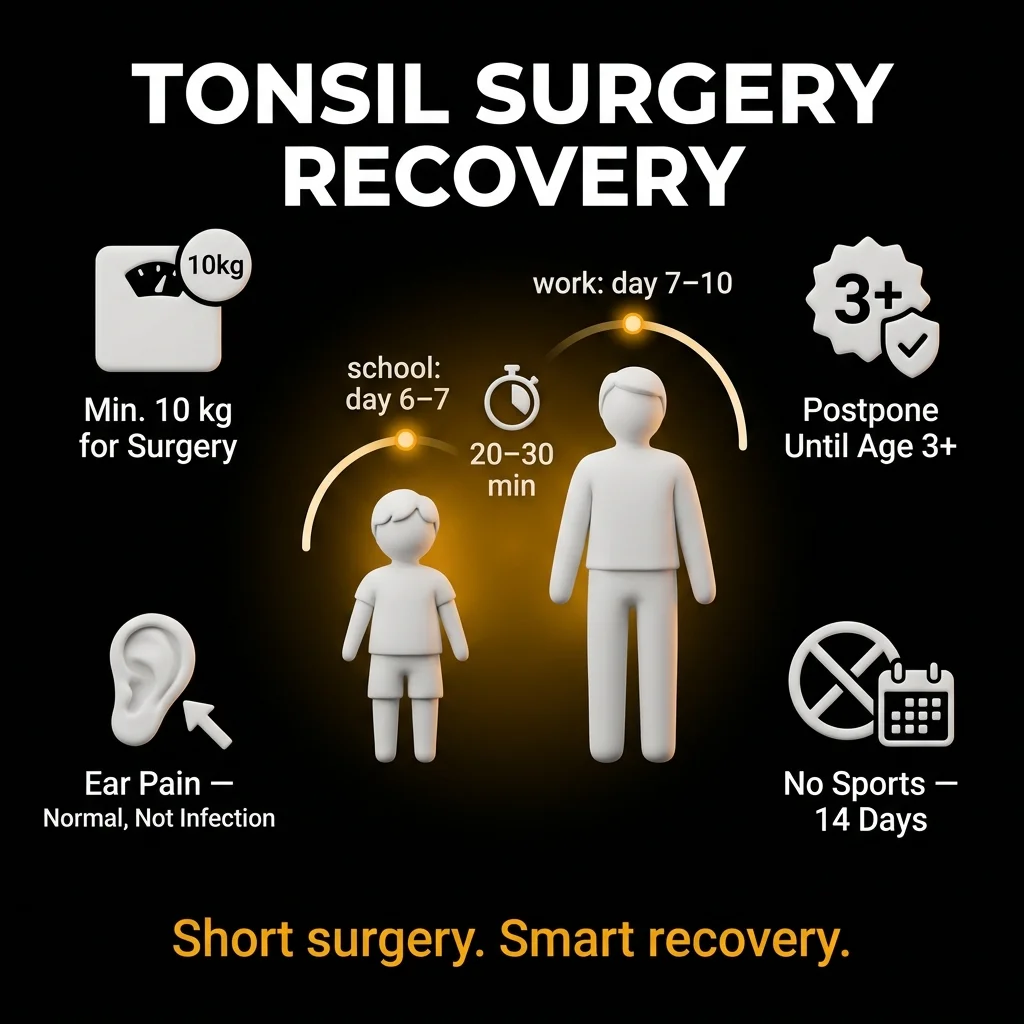
- Age Limit and Immunity: The contribution of the tonsils to the development of the body’s defense system (immune system) is significant, especially in the first 3 years. Therefore, unless there is a vital apnea profile of a size that obstructs the respiratory tract, the goal is to postpone surgery until after the age of 3. In necessary cases, reducing the size of the tonsils with the radiofrequency (RF) method instead of removing them entirely can be preferred as a modern alternative. No negative effect on immunity has been shown regarding the removal of the adenoids.
- Weight Criterion: The average blood loss that can occur in standard tonsillectomies is a medical reality. Considering this safety margin, it is not recommended to perform tonsil surgery on children under 10 kg unless there is a vital necessity.
- Duration: The surgery is performed under general anesthesia completely painlessly. The surgical procedure itself lasts 20 to 30 minutes; however, with anesthesia preparation, bleeding control, and the waking stages, the total hospital process takes 45 to 60 minutes.
Recovery Process and Recommendations After Tonsillectomy
The rules that parents and patients must follow after surgery are of vital importance for a comfortable recovery process.
- Bleeding Control: During the first 2-3 days post-surgery, it is normal to see light, pinkish leaks mixed with saliva depending on the healing of the wound site. However, in the case of fresh red blood coming from the mouth or bloody vomiting, a doctor should be consulted without losing time.
- Pain and Referred Ear Pain: Pain during the recovery process is particularly noticeable during swallowing and may radiate to the ear because the nerve networks are shared. (This situation is not an ear infection). Pain is generally less in children and decreases rapidly within 3-4 days. In adults, pain may last up to 2 weeks because the healing tissue is harder. Painkillers recommended by your doctor should be used regularly.
- Bathing: From the 3rd or 4th day after surgery, bathing is allowed provided it is not very hot (only with lukewarm water for the first 15 days).
- Return to Social Life: Children should rest at home for 2 to 3 days after surgery and return to school after 6-7 days. They should stay away from risky sports activities for at least 14 days. Adults can return to work after 7-10 days of rest and a doctor’s check-up, and should avoid strenuous tasks requiring effort for 2 weeks.
Frequently Asked Questions (FAQ)
We have gathered the most frequently asked questions about the treatment and the topics our patients are most curious about for you:
Can adenoids grow back after surgery?
It is rare for adenoids to grow back after surgery, but it is not entirely impossible. Unlike tonsils, adenoids do not have a capsule, meaning microscopic fragments of lymphoid tissue left behind during the procedure can potentially regrow over time. This is more common in children who undergo surgery before the age of 3 or those with severe uncontrolled allergies. However, with modern surgical techniques such as endoscopic adenoidectomy or plasma ablation, surgeons can ensure more thorough removal, reducing the recurrence rate to less than 1–2%.
Does getting your tonsils out weaken your immune system?
No, removing the tonsils does not weaken the immune system or cause infections to ‘descend’ into the lungs. While tonsils are part of the lymphatic system, they are only a small portion of the body’s defense network, which includes hundreds of lymph nodes and the spleen. Clinical research has shown that tonsillectomy does not increase the frequency of future illnesses; in fact, removing chronically infected tonsils often improves overall health by eliminating a persistent source of inflammation. There is no evidence that the procedure increases the risk of bronchitis or pneumonia; rather, it often leads to fewer respiratory complications in the long run.
Can tonsils and adenoids be removed at the same time?
Yes, it is very common and often recommended to have tonsils and adenoids removed at the same time—a procedure known as an adenotonsillectomy. The primary advantage of combining these surgeries is that the patient only needs to undergo general anesthesia once and follows a single recovery period. This combined approach is typically indicated for children suffering from obstructive sleep apnea (OSA), chronic snoring, or recurrent infections involving both tissues. The procedure usually takes 30 to 45 minutes, and most patients are able to return home the same day.
What can I eat after a tonsillectomy?
Post-tonsillectomy nutrition should be introduced gradually. For the first 3 days, stick to room-temperature or cold, clear liquids such as water, apple juice, milk, and ice cream. From days 4 to 10, you can transition to lukewarm soups, yogurt, pudding, and mashed soft foods. Hydration is the most vital rule; keeping the throat moist significantly reduces pain. It is crucial to avoid hot, acidic (citrus juices, soda), spicy, and crunchy foods (chips, crusty bread) for at least two weeks, as these can irritate the surgical site and increase the risk of post-operative hemorrhage.

Op. Dr. ALİ OĞUZ DEMİR
Otolaryngologist (ENT Specialist)
Following his specialization training, Dr. Ali Oğuz Demir has performed over 500 rhinoplasty surgeries. He holds a National Certificate of Professional Competence, has completed theoretical and practical training at the School of Facial Plastic Surgery, and has international clinical and observational experience from Dr. Yves Saban’s clinic in France.
Take the First Step for a New Beginning!
Clinic Address:
Contact Us
Healthy Growing Children, Uninterrupted and Peaceful Sleep
The decision for tonsil and adenoid surgery is one of the most important investments you can make for the healthy development and quality of life of your child (or yourself). Meet our expert team to leave behind recurring infections and to step into a brand new era where you will wake up every morning refreshed and energetic with healthy breaths. You can contact our clinic and schedule a consultation appointment to answer all your questions and create your personalized treatment plan. We are here to help you and support you throughout this recovery process!