


Septal Deviation (Deviated Septum)
The most fundamental rule of a quality and healthy life is breathing correctly. In human anatomy, the starting point of healthy respiration is the nose. The nose filters, warms, and humidifies the air taken from outside, sending it to the lungs in its most ideal form. However, structural deformities within the nose lead to the disruption of this vital mechanism, negatively affecting not only the respiratory tract but the entire body system, from sleep quality to heart health.
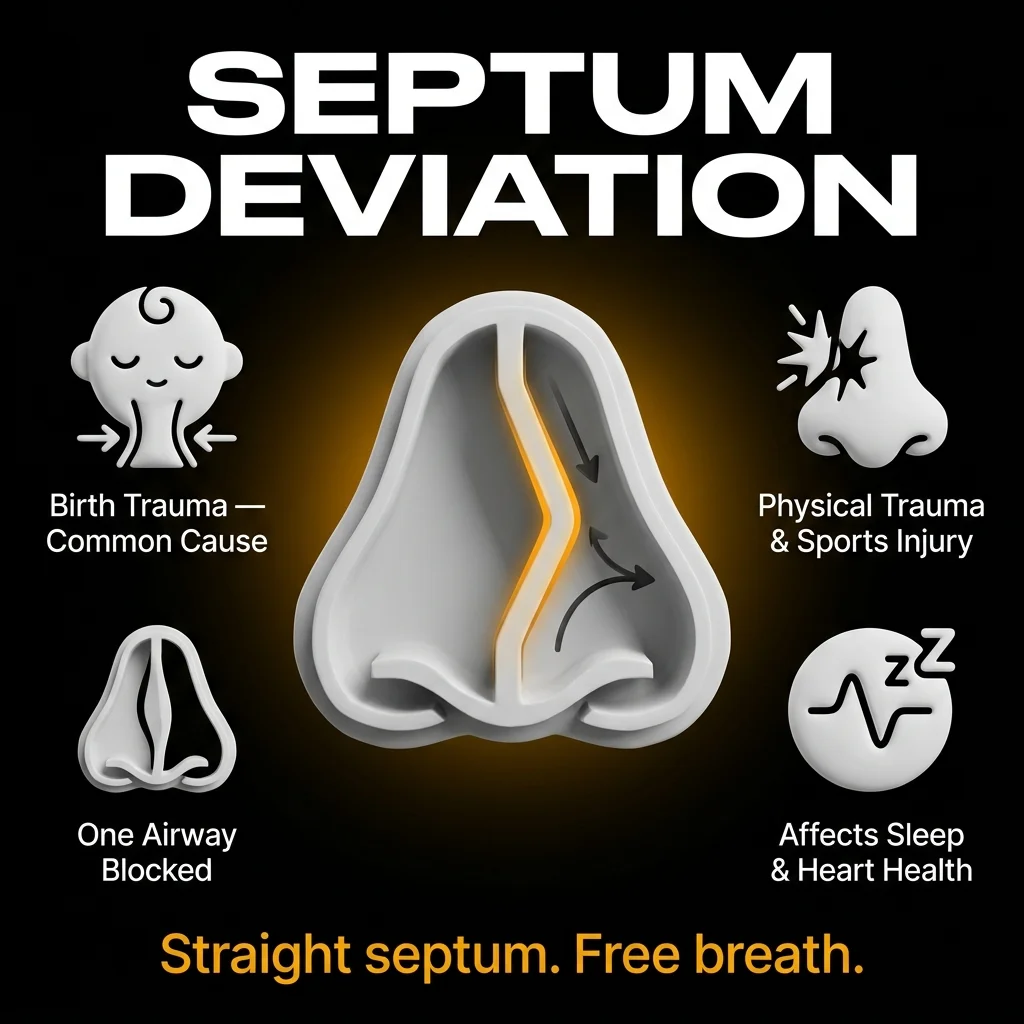
The anatomical structure that divides the nasal cavity into two separate corridors, right and left, consisting of cartilage in the front and bone in the back, is called the “septum.” The bending, twisting, or shifting of this structure from the midline to the right or left is called septum deviation. This condition, colloquially known as a deviated nasal bone or deviated cartilage, is the number one cause of chronic nasal congestion.
On this page, you can find the causes of septum deviation, the hidden damages it inflicts on the body, and all the details of the modern tampon-free septoplasty surgery that eliminates the application of tampons—the greatest fear of patients.
Why Does Septum Deviation Occur? How Does It Form?
Septum deviation is usually the result of a physical impact or a developmental process. Two primary factors play a role in the emergence of these deviations:
- Birth Traumas: Septum deviation is not always caused by impacts received in later ages. In many cases, the foundation of the deviation is laid during birth when the baby’s nose is exposed to pressure while passing through the mother’s narrow birth canal. The cartilaginous structure begins to develop asymmetrically during this early period.
- Physical Traumas and Impacts: Falls and bumps during childhood, as well as traffic accidents, physical altercations, or sports injuries (football, boxing, etc.) during adulthood, cause fractures and deviations in the central partition of the nose. Sometimes, even if the person forgets the impact received on their nose, micro-fractures formed in that area can grow over the years into a serious deviation that obstructs the airway.
Who Should Suspect Septum Deviation? (Symptoms)
People who experience constant nasal congestion often get used to this situation and accept it as normal. However, if you have been experiencing one or more of the following complaints for a long time, the probability of septum deviation is quite high:
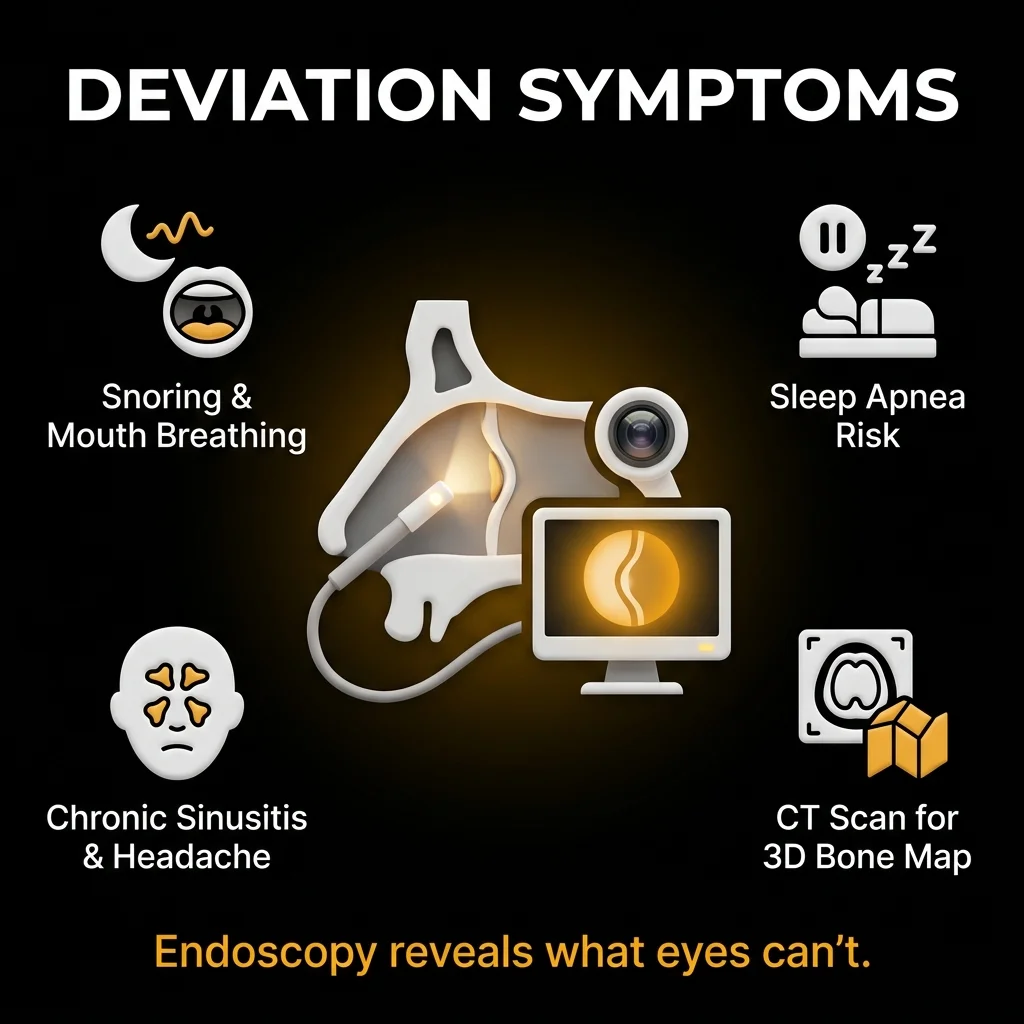
- Constant nasal congestion or congestion that frequently changes sides (difficulty breathing through the nose),
- Loud snoring at night and waking up with a dry mouth in the morning,
- The habit of involuntarily sleeping with the mouth open,
- Momentary cessation of breathing during sleep at night (sleep apnea),
- Frequently recurring sinusitis attacks and upper respiratory tract infections,
- A feeling of pressure in the facial area and chronic headache,
- Impairment in the sense of smell or a decrease in the sense of taste due to insufficient oxygen reaching the olfactory nerves
- Constant fatigue and sleepiness during the day due to the inability to get enough oxygen.
Patients experiencing these symptoms must undergo a detailed ENT examination for the definitive identification of the problem.
How is Septum Deviation Diagnosed?
With today’s technology, the diagnosis of the disease is made very quickly and accurately. The interior of the nose of the patient who applies to the clinic with complaints is examined in depth using thin devices with a light and a micro-camera at the tip—the endoscopic examination method.
Thanks to the endoscopic examination, cartilage and bone deviations in the rearmost parts of the nose, enlargements in the nasal conchae (turbinates), or potential polyps can be seen in detail on the monitor. When necessary, a paranasal sinus tomography is requested to create a three-dimensional map of the bone structure and a correct diagnosis is made.
Treatment of Septum Deviation: Tampon-Free Septoplasty Surgery
There is no treatment for septum deviation with medication, drops, or sprays; it is an anatomical obstruction, and its only permanent treatment is surgery. This operation, in which the bone and cartilage structures obstructing the airway in the midline of the nose are corrected, is called septoplasty.
In past years, cloth tampons meters long were placed inside the nose after nasal surgeries, and removing them was a more traumatic and painful process for patients than the surgery itself. However, thanks to modern medicine, this nightmare has been completely eliminated.
Modern Surgical Process:
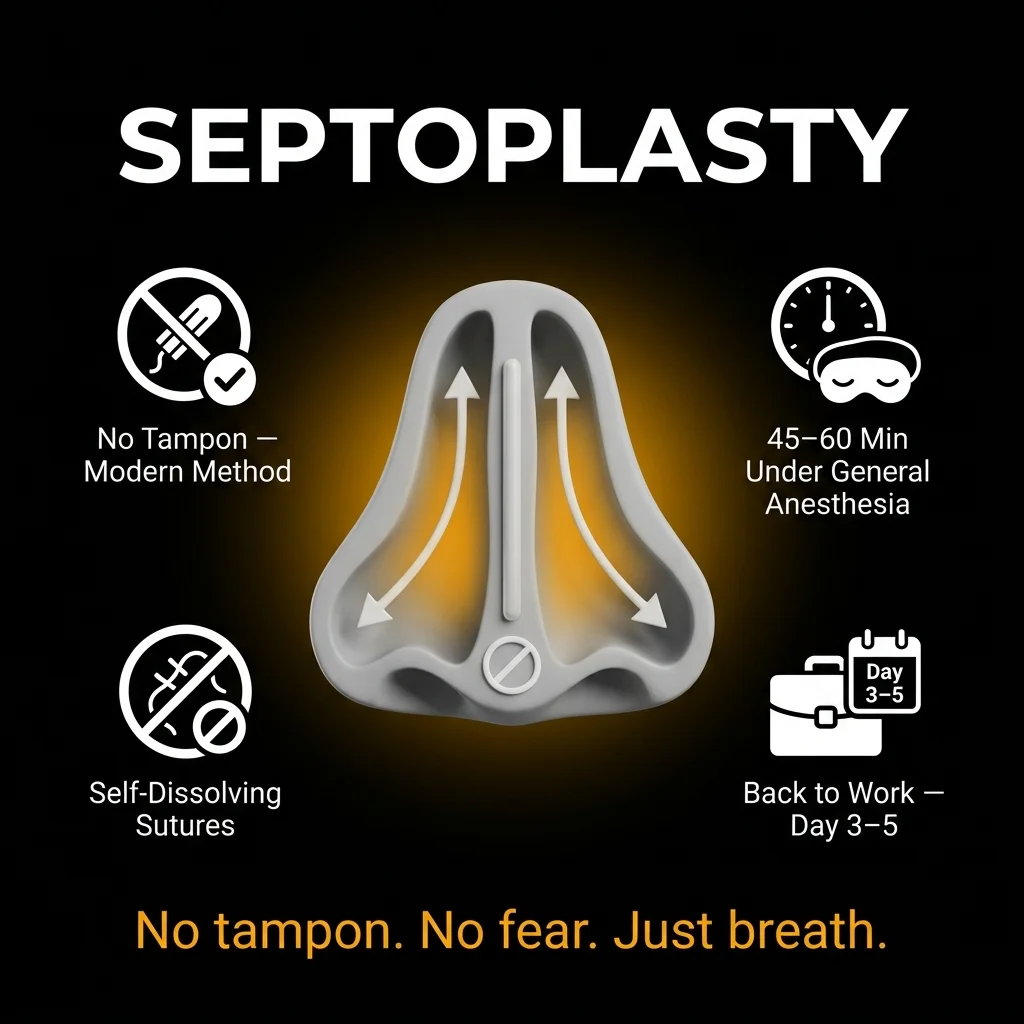
- Surgeries are performed under general anesthesia for the patient’s comfort and safety.
- In this operation, which lasts an average of 45-60 minutes, the deviated cartilage or bone parts are either straightened or controlledly removed to open the airway.
- At the end of the procedure, old-style tampons are absolutely not placed inside the nose.
- To hold the mucosa (inner lining of the nose) together, sutures that do not need to be removed and dissolve spontaneously by the body, or very thin, soft silicone sheets (splints) that do not prevent breathing, are used.
- In this way, post-operative pain, the feeling of pressure, and the “fear of tampon removal” have completely become a thing of the past.
What Awaits You During the Recovery Process?
After this surgery, which does not require hospitalization, patients are generally discharged on the same day.
- First 48 Hours: It is completely normal and expected to have very light, leak-like bloody or pinkish discharges from the nose.
- Congestion: Since edema (swelling) due to surgery will occur in the internal nasal tissues, nasal congestion may be experienced for the first week. During this period, cleaning the inside of the nose with saline solutions (ocean water) recommended by your doctor provides great relief to the patient.
- Return to Work: Since self-dissolving sutures are used, there is no stress of suture removal. Patients can generally return to desk jobs and their normal social lives within 3 to 5 days.
Does the Nasal Bone Regrow or Deviate Again After Septoplasty?
There is a common misconception among the public that “I had surgery, but the bone grew back.” Bone or cartilage tissue removed during a surgical procedure performed according to the rules and with respect to anatomy does not regrow. The actual reason for the recurrence of breathing problems is not bone growth; it is usually the swelling of the nasal conchae (turbinates) again due to allergic reactions or the tissues pulling in a different direction while healing after trauma. However, the permanent success rate of septoplasty surgeries performed with the correct technique is around 85-90%.
What Happens if Septum Deviation is Not Treated? (Hidden Damages to the Body)
Although many patients think, “I have been living like this for years, there is no need for surgery,” nasal congestion is not just a matter of aesthetics or comfort; it is a very serious health problem. If left untreated, the following problems are frequently observed:
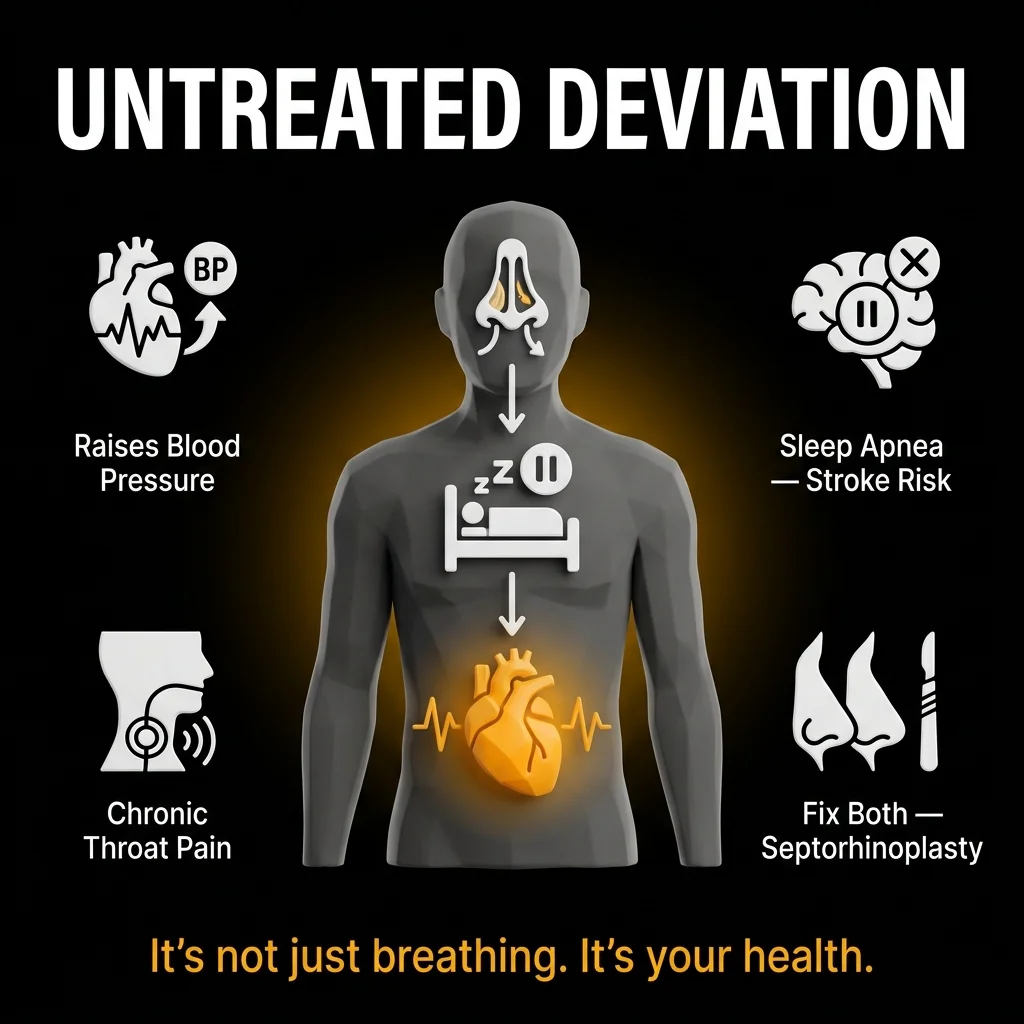
- Heart and Lung Fatigue: Insufficient oxygen entering the body throughout the night disrupts the heart rhythm and raises blood pressure. In the long term, it leads to heart muscle enlargement and a serious decrease in exercise capacity.
- Sleep Apnea (Cessation of Breathing): The cessation of breathing for more than 10 seconds at night cuts off oxygen to the brain, increasing the risk of stroke and heart attack.
- Chronic Pharyngitis: Breathing through the mouth dries out the throat and causes persistent throat pain (pharyngitis) by allowing cold/dirty outside air to hit the tonsils directly.
- Psychological and Cognitive Effects: Poor quality sleep causes concentration problems, irritability, and chronic fatigue syndrome the following day.
Health and Aesthetics Together: Septorhinoplasty
In our society, breathing problems are often confused with aesthetic concerns. A patient whose nasal bone is deviated on the inside may have a nose that looks completely straight from the outside; conversely, a person with a hump or asymmetry on the outside of the nose most likely has an obstruction on the inside as well.
In our hospital, patients who have both internal septum deviation (breathing problem) and external deformity are treated under a single session and a single anesthesia. This combined surgery is called septorhinoplasty. In this way, the patient both achieves comfortable breathing and attains a natural and aesthetic nose appearance that is in full harmony with their face.
Frequently Asked Questions (FAQ)
We have gathered the most frequently asked questions about the treatment and the topics our patients are most curious about for you:
Is septoplasty a difficult or major surgery?
While septoplasty requires surgical precision, it is not considered a difficult or major surgery for the patient. It is typically performed as an outpatient procedure, lasting between 30 to 60 minutes, allowing most patients to go home the same day. Since the external structure of the nose is not altered, there is usually no bruising or swelling around the eyes. Modern silicone splints have replaced the dreaded traditional packing, allowing patients to breathe more comfortably immediately after surgery and ensuring a painless removal. Post-operative discomfort is generally minimal and easily managed with standard pain relievers.
Does septoplasty change the shape of your nose?
No, a standard septoplasty (deviated septum surgery) does not alter the external shape, size, or aesthetic appearance of your nose. The procedure is strictly focused on straightening the nasal septum—the internal wall that divides your nostrils—to improve airflow. All incisions are typically made inside the nose, meaning there are no visible scars. However, if you also wish to address cosmetic concerns such as a dorsal hump, a drooping tip, or external crookedness, a combined procedure called septorhinoplasty is required to achieve both functional and aesthetic goals.
Will I have bruising or swelling after septoplasty?
Generally, no. A standard septoplasty does not cause facial bruising or significant external swelling. This is because the procedure is performed entirely through the nostrils, focusing on the internal nasal septum without manipulating the external nasal bones or tissues. Bruising and ‘black eyes’ are typically associated with rhinoplasty (cosmetic nose surgery), where the bone structure is reshaped. After a septoplasty, you may experience a slight feeling of internal fullness or congestion, but your external appearance will remain unchanged, with no visible bruising.
Is a deviated septum genetic?
Yes, a deviated septum can be genetic. Nasal anatomy and facial bone structure are hereditary traits; therefore, you may inherit a predisposition for a crooked septum from your parents. Some infants are born with the condition due to their position in the womb or pressure during the birth process. However, in addition to genetics, acquired causes such as sports injuries, falls, or accidents are among the most common reasons for a deviated septum. Since the nose continues to grow during puberty, a slight congenital deviation may become more apparent as the facial structure matures.
Is one-sided nasal congestion a sign of a deviated septum?
Yes, unilateral nasal congestion—especially when it consistently occurs on the same side—is a hallmark symptom of a deviated septum. However, it is not the only possible cause. Other conditions such as one-sided turbinate hypertrophy, nasal polyps, or even a foreign body can lead to persistent blockage in one nostril. It is important to distinguish this from the nasal cycle, a natural physiological process where congestion switches sides every few hours. If the blockage is constant and localized to one side, a professional evaluation is necessary to rule out structural issues or other obstructions.

Op. Dr. ALİ OĞUZ DEMİR
Otolaryngologist (ENT Specialist)
Following his specialization training, Dr. Ali Oğuz Demir has performed over 500 rhinoplasty surgeries. He holds a National Certificate of Professional Competence, has completed theoretical and practical training at the School of Facial Plastic Surgery, and has international clinical and observational experience from Dr. Yves Saban’s clinic in France.
Take the First Step for a New Beginning!
Clinic Address:
Contact Us
Rediscover Your Quality of Life with Deep Breaths
The tampon-free septoplasty procedure is the most valuable gift you can offer yourself to wake up to uninterrupted sleep and energetic mornings. Meet our expert team to leave behind that feeling of congestion that makes you feel constantly tired and steals your life energy, and to make a healthy start where you will inhale life to the fullest with every breath. You can contact our clinic and schedule a consultation appointment to answer all your questions and create your personalized treatment plan. We are here to help you and support you throughout your process of achieving free breathing!