


Rhinoplasty (Nose Surgery)

Located at the very center of your face, the nose is the most prominent organ that defines your characteristic expression, ensures facial symmetry, and most importantly, enables healthy breathing.
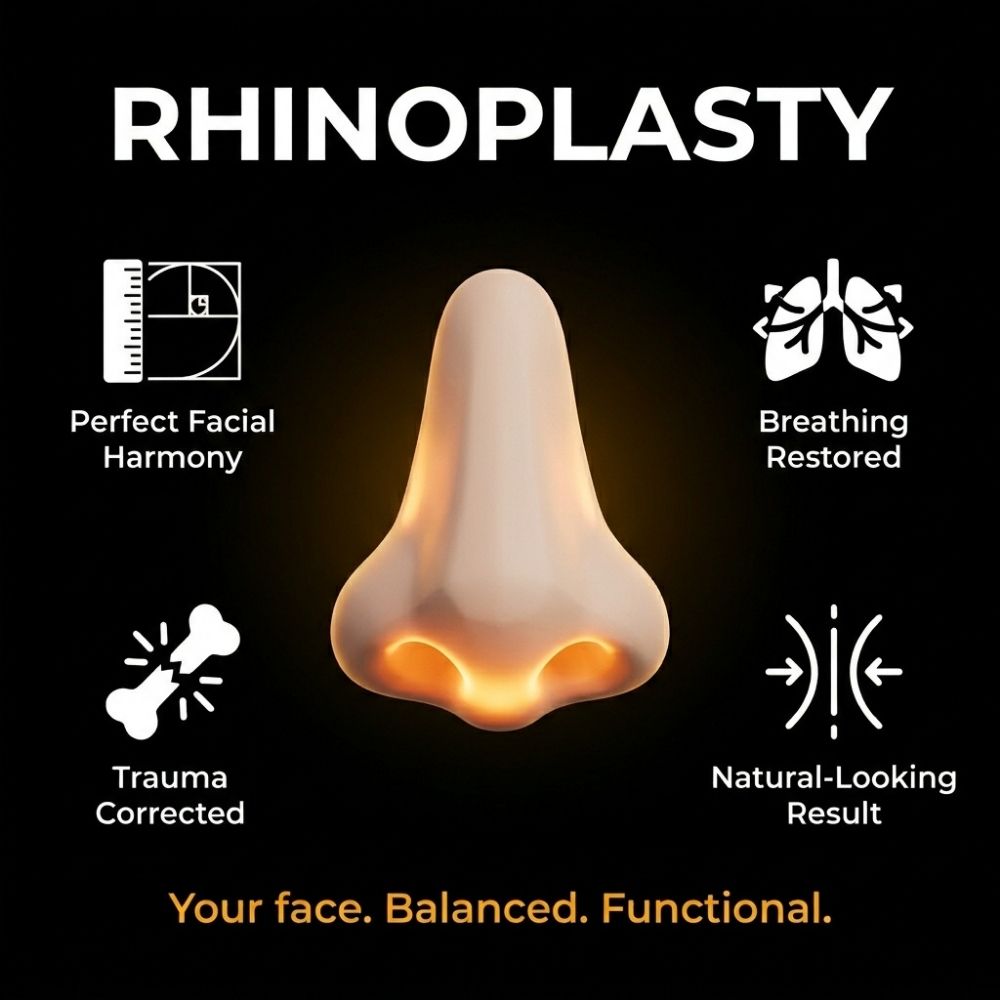
Rhinoplasty, commonly known as a nose job, is a comprehensive surgical procedure performed to harmonize the shape, size, and overall angle of the nose with your other facial features (golden ratio). It also aims to permanently resolve any existing breathing difficulties (such as deviation).
In modern aesthetic surgery, our primary goal is to build a nasal structure that is functional, flawless, and natural-looking—one that fits your face perfectly without looking “operated on.” A well-planned rhinoplasty not only enhances your physical appearance but also boosts your self-confidence, making a significant positive impact on your social and professional life.
When is Rhinoplasty Performed?
While rhinoplasty is often preferred by patients seeking aesthetic improvements, it is frequently carried out simultaneously with the resolution of functional issues (breathing difficulties). The most common conditions addressed in our clinic include:
- Aquiline (Humped) Nose: Protrusions on the nasal bridge (dorsum) caused by excess bone or cartilage.
- Nasal Tip Deformities: A nasal tip that is droopy, sagging, overly wide (bulbous nose), or asymmetrical.
- Size Disproportions: A nose that is too large, too long, or too small in proportion to the rest of the face.
- Asymmetry and Crookedness: Deviations in the nasal axis, whether congenital or acquired later in life.
- Post-Traumatic Deformities: Structural damage to the nose resulting from accidents, falls, or impacts.
- Functional Issues (Septorhinoplasty): Difficulty breathing, snoring, and poor sleep quality caused by a deviated septum (the wall inside the nose) or enlarged turbinates (concha).
Who is a Good Candidate for Rhinoplasty?
It is a medical necessity for individuals considering rhinoplasty to have completed their bone and cartilage development. This growth process is typically finalized around ages 16–17 for women and 17–18 for men. However, the generally accepted minimum age for the procedure is 18.
In addition to physical maturity, a patient’s overall health must be suitable for anesthesia and undergoing a surgical operation.
Psychological readiness is just as crucial as physical preparation. Factors such as having realistic expectations and maintaining transparent communication between the surgeon and the patient directly influence the success of the operation.
Modern Rhinoplasty Techniques
Every patient’s nasal structure, skin thickness, and aesthetic needs are unique. Therefore, rhinoplasty is not a “one-size-fits-all” surgery. The following primary techniques are utilized in surgical planning:
1. Closed Rhinoplasty (Scarless Nose Surgery)
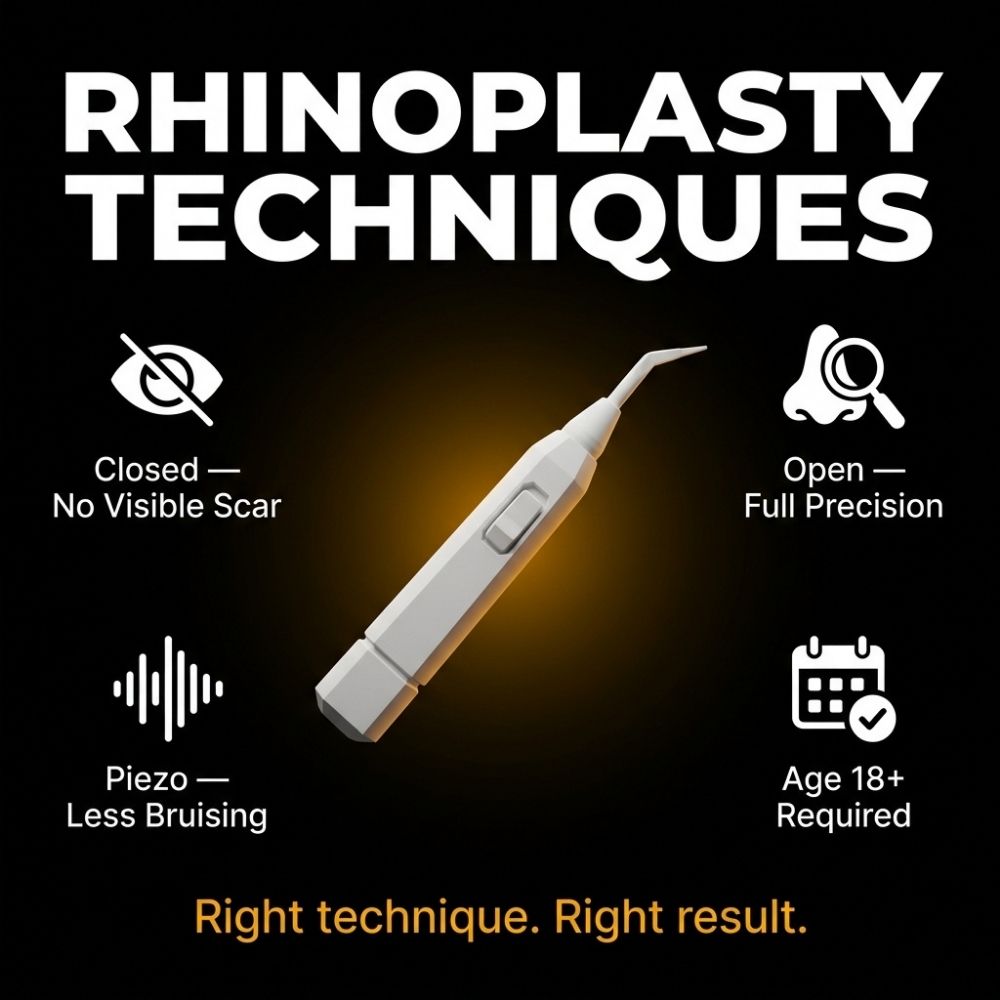
In this technique, all surgical incisions are made inside the nostrils. There are no visible external scars. The recovery process is generally faster, and because the nerves at the nasal tip sustain less interference, swelling (edema) subsides more quickly. However, since the surgeon’s field of vision is more restricted, it may not be the preferred choice for complex revision cases or severe asymmetry.
2. Open Rhinoplasty
This method is performed by making a very small incision in the area separating the nostrils, called the columella, and gently lifting the nasal skin. This provides the surgeon with direct and full command over the entire bone and cartilage structure of the nose. It yields excellent results in cases requiring millimetric calculations or cartilage grafting. The incision scar fades over time and becomes virtually invisible.
3. Piezo (Ultrasonic) Rhinoplasty
This is a high-tech method that uses ultrasonic sound waves to shape the bones, replacing the traditional hammers and rasps. The Piezo device acts exclusively on bone tissue, leaving soft tissues such as blood vessels, nerves, and muscles unharmed. Consequently, the risk of postoperative bruising and swelling is minimized, ensuring a much more comfortable recovery period.
The Treatment Process: What to Expect
1. Detailed Examination and 3D Simulation: Your journey begins with a comprehensive consultation. An endoscopic examination of the nasal interior is performed, followed by professional photography. Using advanced 3D simulation software, a potential post-operative preview of your nose is designed to ensure it harmonizes perfectly with your facial features.
2. Pre-Operative Preparation: Necessary blood tests and an anesthesia clearance are conducted. At least 1-2 weeks before surgery, patients must stop taking blood thinners and herbal teas. Smoking is strictly prohibited, as it significantly impairs the body’s ability to heal wounds and increases surgical risks.
3. Surgical Procedure: The operation is performed in a fully equipped hospital environment under general anesthesia, monitored by specialist anesthesiologists. The procedure typically lasts between 2 to 3 hours. Upon completion, a protective splint is placed on the outside of the nose, while perforated silicone internal splints (which allow you to breathe) are placed inside.
4. Discharge: Depending on your recovery, you may be discharged on the same day or after a single night of hospital observation.
The Recovery Journey: Step-by-Step
Rhinoplasty is a process that requires patience. The final shape of the nose develops over time, depending on the individual healing rate of the tissues.
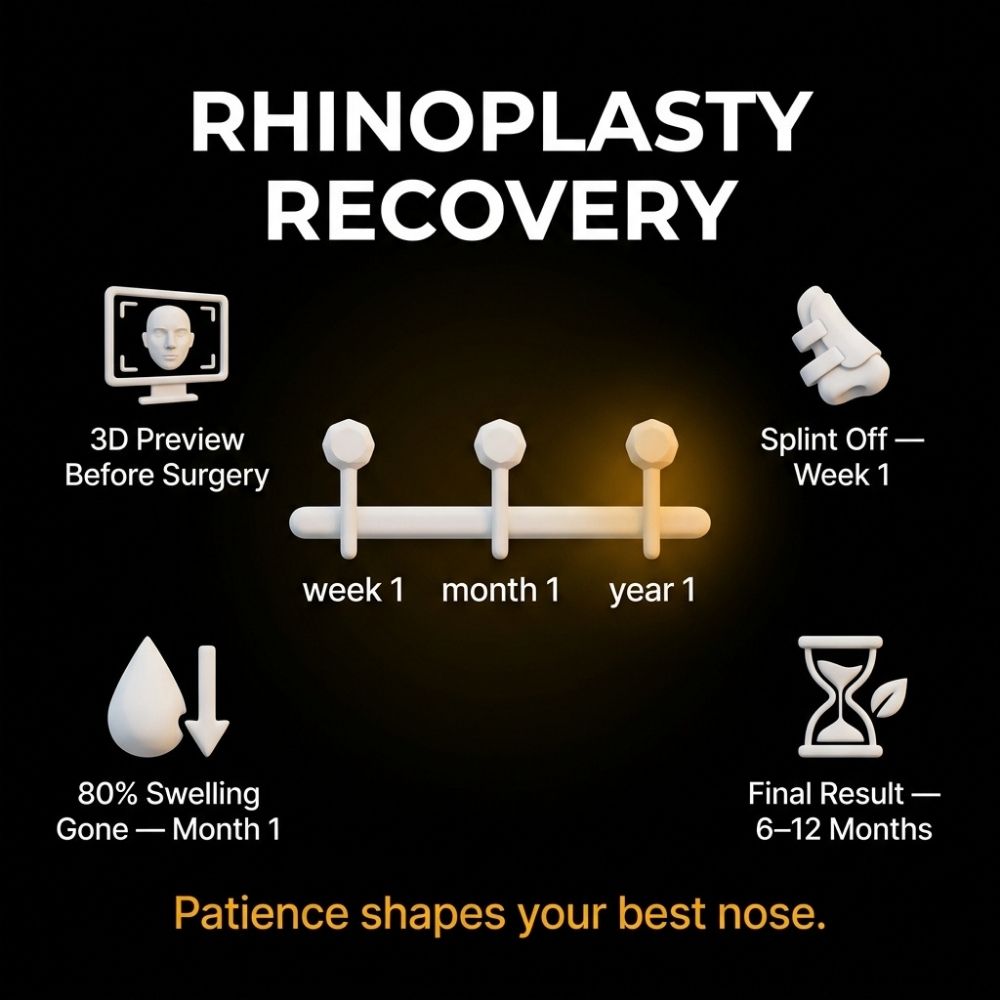
The First Week: Mild facial swelling and slight bruising may occur depending on your skin type. Pain is usually minimal and easily managed with standard pain relievers. Sleeping with your head elevated (using two pillows) helps reduce edema. At the end of the first week, your surgeon will remove the external splint and silicone internal splints in a completely painless procedure.
The First Month: Approximately 70–80% of the swelling (edema) subsides during this period. The new shape of your nose becomes largely visible, though some slight firmness may still be felt upon touch.
6 Months to 1 Year: The healing process is finalized. The nasal tip softens, the tissues settle completely, and the final, permanent result is achieved. For patients with thicker skin, this process can extend up to 1.5 years.
Frequently Asked Questions (FAQ)
We have gathered the most frequently asked questions about the treatment and the topics our patients are most curious about for you:
Is rhinoplasty surgery painful?
Most patients are surprised to find that rhinoplasty is not a particularly painful procedure. You will likely feel a sensation of “fullness” or “nasal congestion” rather than sharp pain. Any mild discomfort during the first few days can be easily managed with standard pain relievers prescribed by your surgeon. Using modern Piezo (Ultrasonic) technology also significantly reduces post-operative trauma and bruising.
How long is the recovery period for a nose job?
The initial recovery period usually lasts about 7 to 10 days. This is when the external splint and internal silicone supports are removed, allowing most patients to return to work or social activities. While 80% of the swelling subsides within the first month, it takes about 12 to 18 months for the nose to settle into its final, refined shape.
Will I have visible scars after rhinoplasty?
It depends on the technique used. In Closed Rhinoplasty, all incisions are made inside the nostrils, leaving no visible scars. In Open Rhinoplasty, a tiny, millimetric incision is made on the base of the nose (columella). This small mark fades significantly over time and becomes virtually invisible to the naked eye within a few months.
Are the results of rhinoplasty permanent?
Yes, the structural changes made during rhinoplasty are permanent. Unlike non-surgical fillers, a surgical nose job provides a lifelong transformation. However, it is important to remember that your face will continue to age naturally over the decades, which may subtly affect the skin and tissues around the nose over time.
At what age can you get a nose job?
Rhinoplasty can be performed once the nasal bones and cartilage have fully developed. This typically occurs at age 16 for females and 18 for males. While there is no upper age limit, the most important factors are the patient’s overall health, skin elasticity, and having realistic aesthetic expectations.
Achieve the Healthy and Aesthetic Nose of Your Dreams
Deciding on rhinoplasty is one of the best investments you can make in yourself. Meet our expert team to both fulfill your aesthetic expectations and step into a new chapter where you can breathe freely.
To get answers to all your questions and create your personalized treatment plan, feel free to contact our clinic and schedule your consultation. We are here to support you and walk by your side throughout this exciting journey!

Op. Dr. ALİ OĞUZ DEMİR
Otolaryngologist (ENT Specialist)
Following his specialization training, Dr. Ali Oğuz Demir has performed over 500 rhinoplasty surgeries. He holds a National Certificate of Professional Competence, has completed theoretical and practical training at the School of Facial Plastic Surgery, and has international clinical and observational experience from Dr. Yves Saban’s clinic in France.