


Blepharoplasty (Eyelid Surgery)

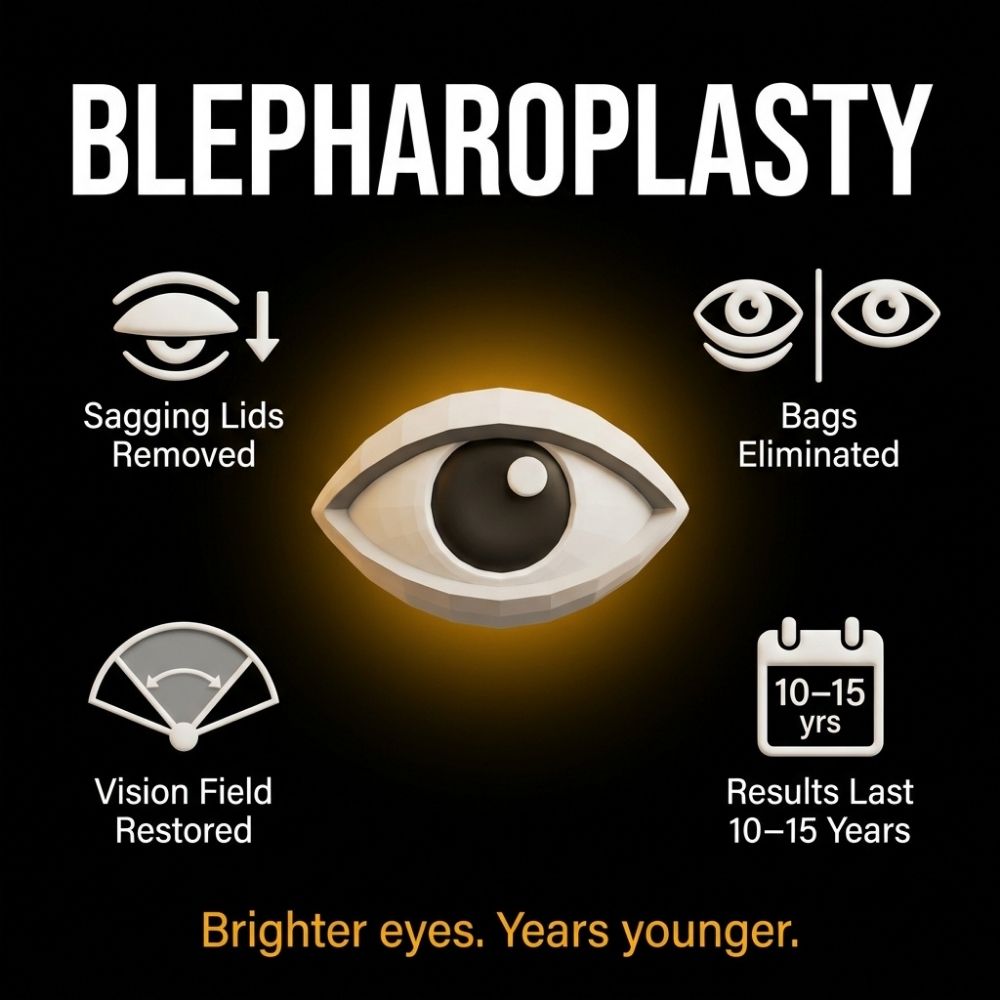
The eyes and the periorbital area possess the thinnest and most sensitive skin structure on our face. Consequently, the eyelids are the first place where signs of aging, stress, fatigue, and genetic factors manifest. Over time, drooping and sagging occur in the upper eyelids, while puffiness and bags form in the lower eyelids. This can make an individual look much older, more tired, and unhappier than they truly are. In advanced cases, sagging upper eyelid skin can even restrict the field of vision, turning into a functional problem.
Blepharoplasty, commonly known as Eyelid Surgery, is a rejuvenation procedure for the eye area performed by removing or repositioning excess skin, weakened muscle tissue, and herniated fat pads in the upper and lower eyelids. On this page, we have detailed the recovery process and all the specifics of this procedure, which provides your face with a bright and energetic expression.
Who is a Suitable Candidate for Blepharoplasty?
Although eyelid aesthetics is often associated with advanced age, there is no strict age limit for this surgery. Suitable candidates can be summarized as follows:
- Structural and Genetic Factors: Individuals who have under-eye bags or drooping eyelids (structural puffiness) even in their 20s or 30s due to familial predisposition.
- Age-Related Deformations: Usually individuals aged 40 and over who experience significant sagging and wrinkles in the eyelids as skin elasticity decreases.
- Visual Field Restriction: Patients whose excess upper eyelid skin descends over the eyelashes, limiting their upper and outer visual angles.
- Aesthetic Concerns: Anyone who complains of looking constantly tired, sleep-deprived, or sad, and wishes to achieve a more vigorous and youthful expression.
Blepharoplasty results are generally highly satisfying, and the rejuvenation effect typically maintains its permanence for 10 to 15 years. While some skin loosening is natural as the aging process continues over the years, your eyes will never return to the tired state they were in before the surgery.
How is Blepharoplasty (Eyelid Surgery) Performed?
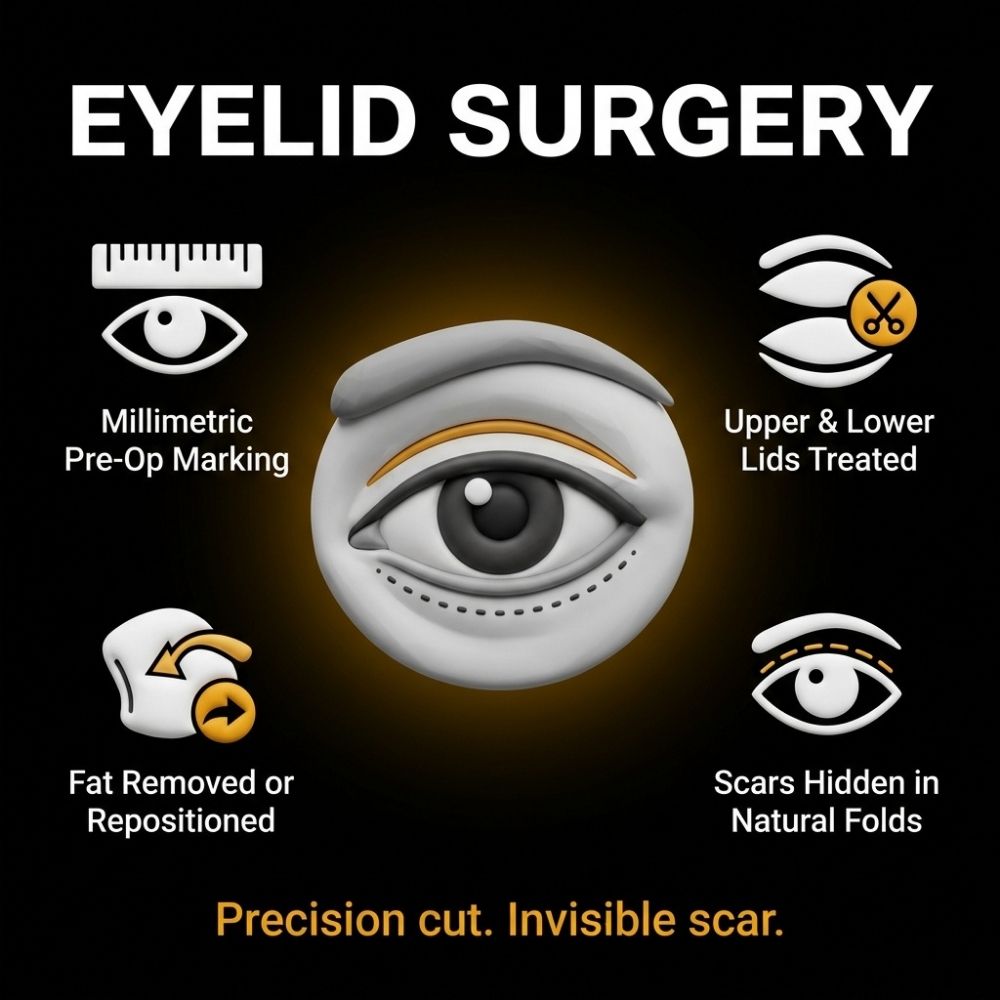
Depending on the patient’s needs, eyelid aesthetics can be applied to the upper eyelids only, the lower eyelids only, or both in the same session (quad blepharoplasty). The surgical procedure includes the following steps:
- Planning and Marking: This is the most critical stage for the success of the surgery. To prevent asymmetries and determine the ideal amount of skin/fat to be removed, your physician makes precise millimetric markings along the natural folds of your eyelids while you are standing or sitting.
- Anesthesia: Upper eyelid surgeries are usually performed under local anesthesia, where only the specific area is numbed. For lower eyelid interventions or more comprehensive operations where all four lids are treated simultaneously, sedation or general anesthesia may be preferred in addition to local anesthesia for patient comfort.
- Upper Eyelid Incision and Repair: The incision is made along the natural crease of the upper eyelid. Excess skin and muscle tissue are removed through this entry point. If necessary, herniated fat tissue in the inner portion is reduced. Since the incision is placed within the natural crease, the scar is not visible once healed.
- Lower Eyelid Incision and Repair: For the lower lid, the incision is typically made 1–2 millimeters below the lash line. Fat tissues causing under-eye bags are removed or redistributed to fill the tear trough. If present, excess skin is removed as a thin strip to tighten the area. (If there is no excess skin and only fat pads are to be addressed, the incision can be made from the inside of the eyelid —transconjunctival— leaving no external scar).
- Closing: At the end of the procedure, incisions are meticulously closed using very fine aesthetic sutures or tissue adhesives suitable for eye anatomy. Thin surgical tapes are applied over the incision lines.
What to Expect During the Recovery Process After Blepharoplasty?
Contrary to popular belief, the recovery process for eyelid surgery is quite comfortable and generally painless.
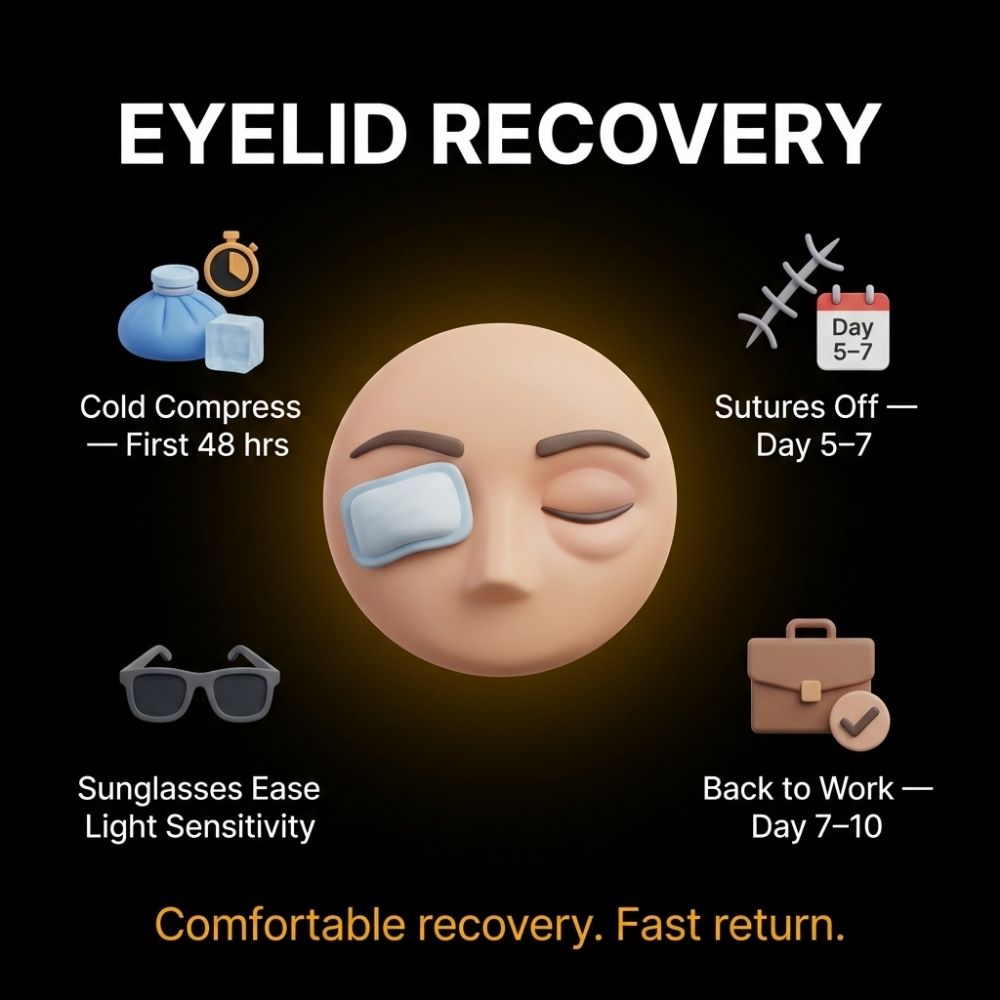
- The First 48 Hours: Swelling (edema) and bruising around the eyes are completely normal. To minimize these effects, applying a cold compress every hour for the first 2 days is crucial.
- Pain Management: Severe pain is not expected; any mild discomfort can be easily managed with simple pain relievers prescribed by your doctor. You may experience a stinging sensation or watery eyes.
- Blurred Vision and Light Sensitivity: Due to the protective ointments applied to the eyes during surgery and the resulting swelling, you may experience slight blurred vision and sensitivity to light for the first few days. Wearing sunglasses will provide significant comfort.
- Removal of Sutures: The fine sutures and tapes on the eyelids are typically removed painlessly between the 5th and 7th days.
- Return to Social Life: Light activities, such as walking, increase blood circulation and accelerate healing. Once the sutures are removed (within approximately 7–10 days), patients can easily return to work and their daily routines. Any remaining faint bruising can be easily concealed with makeup.
Frequently Asked Questions (FAQ)
We have gathered the most frequently asked questions about the treatment and the topics our patients are most curious about for you:
How long does blepharoplasty surgery take?
A blepharoplasty procedure typically takes between 45 minutes and 2 hours, depending on whether you are having upper, lower, or both eyelids treated simultaneously.
Will I have scars after blepharoplasty?
Blepharoplasty is designed to minimize visible scarring by placing incisions within the natural folds of the eyelid. In upper eyelid surgery, the incision is hidden in the natural crease. For the lower eyelid, incisions are made either just below the lash line or inside the eyelid (transconjunctival approach), leaving no external scar. Most scars fade significantly and become virtually invisible within a few months.
Can eyelid surgery cause vision problems?
Blepharoplasty typically does not cause vision problems. In fact, if sagging skin on the upper eyelids is obstructing your peripheral vision, the procedure can significantly improve your field of vision. While some patients may experience temporary blurred vision immediately after surgery due to swelling or prescribed ointments, this is a normal part of the recovery process and resolves quickly.
When can I wear makeup after blepharoplasty?
Most surgeons recommend waiting at least 10 to 14 days after a blepharoplasty before applying makeup. It is crucial to wait until the incisions have fully closed and any stitches have been removed. To minimize the risk of infection, you should use clean or new makeup products and be very gentle when applying or removing them around the delicate eye area.
Does blepharoplasty change the shape of your eyes?
A standard blepharoplasty is designed to rejuvenate the eye area by removing excess skin and fat, but it does not change the fundamental shape or slant of your eyes. Its primary goal is to create a more refreshed and youthful appearance. However, if you are looking to change the tilt or achieve a more ‘almond-shaped’ look, additional procedures like canthopexy or canthoplasty can be performed in conjunction with eyelid surgery.
Is there a risk of my eyes not closing after blepharoplasty?
It is common and usually temporary to experience difficulty closing your eyes fully during the first few days after surgery due to swelling (edema). However, a permanent inability to close the eyes, known as lagophthalmos, is a rare but serious risk that occurs if too much skin is removed. To minimize this risk, it is vital to choose an experienced surgeon who prioritizes preserving the functional integrity of the eyelids while achieving aesthetic results.

Op. Dr. ALİ OĞUZ DEMİR
Otolaryngologist (ENT Specialist)
Following his specialization training, Dr. Ali Oğuz Demir has performed over 500 rhinoplasty surgeries. He holds a National Certificate of Professional Competence, has completed theoretical and practical training at the School of Facial Plastic Surgery, and has international clinical and observational experience from Dr. Yves Saban’s clinic in France.
Take the First Step for a New Beginning!
Clinic Address:
Contact Us
Erase the Signs of Aging, Achieve Vibrant and Bright Eyes
Choosing blepharoplasty is one of the best investments you can make in yourself to make peace with your reflection in the mirror once again. Meet our expert team to rid yourself of that heavy expression that makes you look older and more tired than you are, and to step into a much fresher, more rejuvenated appearance. You can contact our clinic and schedule a consultation appointment to answer all your questions and create your personalized treatment plan. We are here to help you and support you throughout this exciting process!