


Diagnosis and Treatment of Hearing Loss
The sense of hearing is one of the most fundamental bridges that enables us to communicate with our environment, perceive dangers, and actively participate in social life. Hearing loss is a serious health problem that can emerge in every period from childhood to adulthood, regardless of age or gender, and significantly affects individuals’ quality of life and psychology.
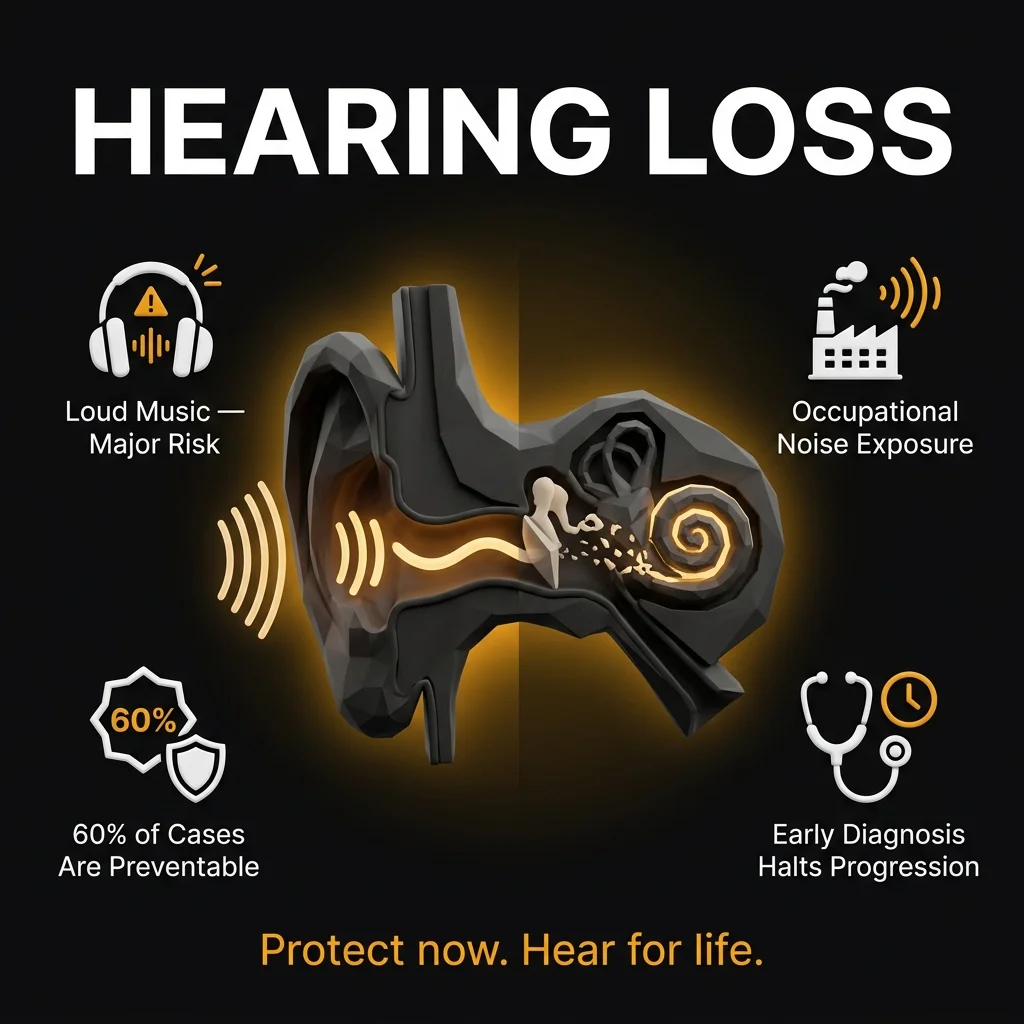
Comprehensive scientific studies conducted today show that 60% of the factors causing hearing loss stem from preventable factors. Thanks to diagnosis made at the right time and personalized modern treatment approaches, it is largely possible to halt the progression of hearing loss and regain lost sounds.
On this page, we examine the working mechanism of the ear, types of hearing loss, diagnostic methods, and the most current treatment options in detail.
Why Does Hearing Loss Occur and Can It Be Prevented?
Many factors that we are unknowingly exposed to in daily life threaten our hearing health. Specifically, not protecting oneself from very noisy environments, constantly listening to music at high volume levels with headphones, and not using protective equipment (earplugs, etc.) in work/occupational environments such as heavy industry are the greatest risk factors. Taking early precautions against potential hearing loss and strictly following the recommendations of ENT (Ear, Nose, and Throat) doctors is of vital importance in preventing permanent damage.
To better understand hearing loss and its underlying causes, it is first necessary to look at how the miracle of hearing takes place—namely, the structure of the ear.
Normal Ear Functions and Anatomy
The hearing system consists of three main parts working in tremendous harmony. Each part has an irreplaceable role in the process of perceiving sound and transmitting it to the brain:
- Outer Ear: Consists of the auricle (pinna) and the external auditory canal. The primary task of these structures is to collect surrounding sound waves like a funnel and direct them directly to the eardrum.
- Middle Ear: Located between the outer and inner ear, right behind the eardrum. The eardrum and the three small hearing ossicles (malleus, incus, stapes), which are the smallest bones in the human body, are located in this area. Sound waves coming from outside vibrate the eardrum; the ossicles undertake the task of mechanically amplifying this vibration and transmitting it to the inner ear fluids.
- Inner Ear (Snail/Cochlea): The region where the electrical parts of hearing take place. There are millions of microscopic hearing (hair) cells and balance system nerve endings within the inner ear fluid. Waves are formed in the fluid by the vibration of the stapes bone in the middle ear. These waves stimulate the nerve endings, turning into electrical impulses perceived as “sound” in the brain.
What are the Types of Hearing Loss?
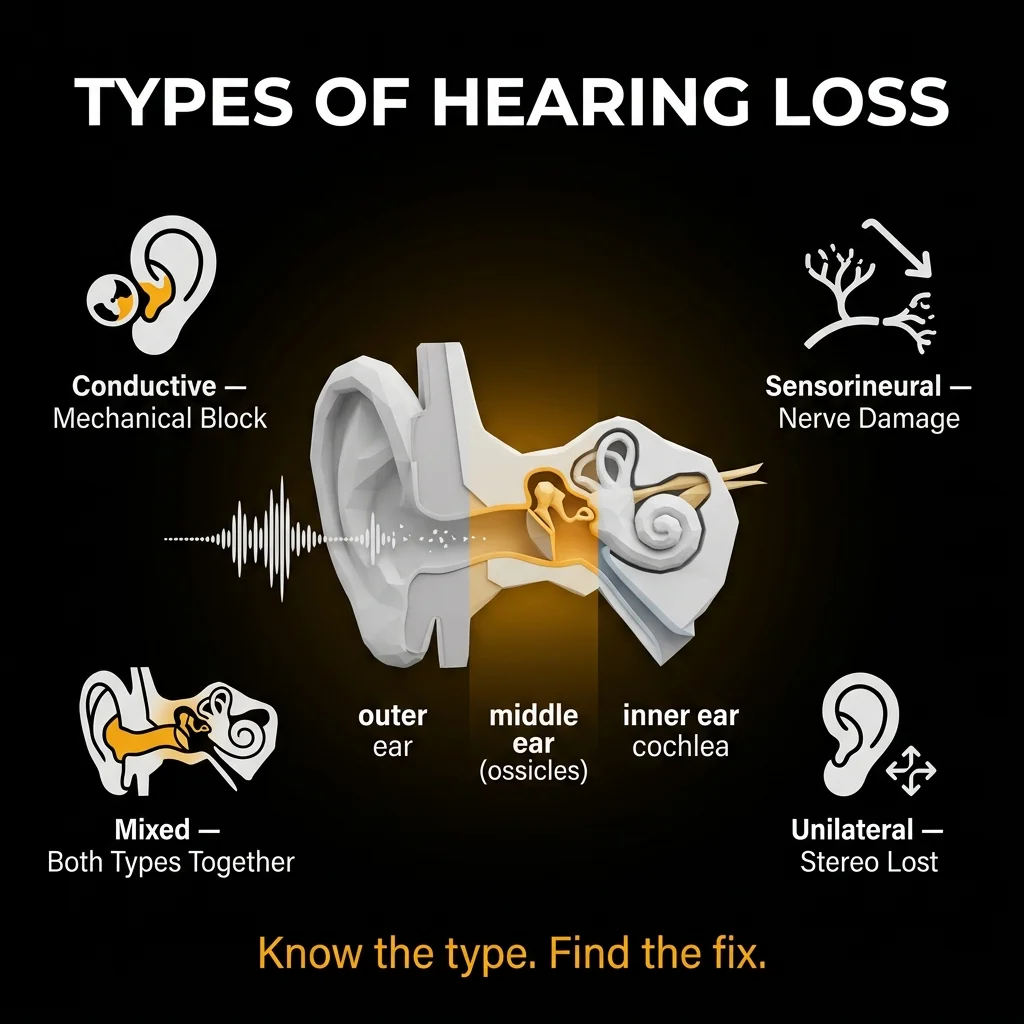
While the outer and middle ear structures are responsible for transmitting sound, the inner ear structures are responsible for perceiving it. Hearing losses are divided into three main categories according to the anatomical region where the problem originates:
1. Conductive Hearing Loss It occurs due to factors blocking the external auditory canal (earwax, foreign body), perforation in the eardrum, middle ear infections (inflammations), or diseases involving the calcification of the middle ear ossicles (otosclerosis). It is the state where sound cannot be mechanically transmitted to the inner ear.
- Symptoms: The patient feels their ear is blocked or full. Since they hear their own voice loudly inside their head, they usually speak in a very low voice. Interestingly, these patients hear better in noisy environments. They may feel the need to stop while chewing to hear speech clearly. Talking on the phone is generally not much affected by this condition.
- Course: Patients with conductive loss do not become permanently deaf. Since the problem is usually anatomical, their hearing can almost always be successfully restored with medical treatments, minor surgical operations, or appropriate hearing aids.
2. Sensorineural (Nerve Type) Hearing Loss It occurs as a result of impaired inner ear blood circulation, increased inner ear fluid pressure, noise trauma, genetic factors, or impaired hearing nerve transmission. The most common cause is the natural wear and deterioration occurring in the nerve endings due to aging (presbycusis).
- Symptoms: Patients with this type of loss can usually hear people talking but have difficulty understanding (discriminating) the words clearly. Therefore, the other party increasing their voice volume (shouting) usually does not make it easier for them to understand. They communicate more comfortably in quiet environments and experience significant difficulty while talking on the phone. Since the loss usually begins in “treble” (high-frequency) sounds, they may understand deeper (low-frequency) male voices better compared to thin female or child voices. They may not be able to hear high-pitched tones such as doorbells, birdsongs, or phone ringtones.
- Course: It is generally a loss that is not anatomically reversible (repairable by surgery), but quality of life can be fully regained with early diagnosis and correct hearing aid use. It rarely results in total deafness.
3. Mixed Type Hearing Loss This is the condition where conductive hearing loss and sensorineural hearing loss are seen together in the same ear. In other words, there is both a problem in the middle ear (e.g., a perforated drum) and a neural weakening in the inner ear.
4. Single-Ear (Unilateral) Hearing Loss Patients with hearing loss in only one ear cannot perceive the direction of the sound because they lose stereo perception. It becomes very difficult to understand sounds coming from the affected side or conversations in crowded/noisy environments. If the loss is of the conductive type, a good hearing balance can be achieved through surgical intervention. In sensorineural losses, this balance can be re-established with specially designed CROS hearing aids.
Normal Ear Functions and Anatomy
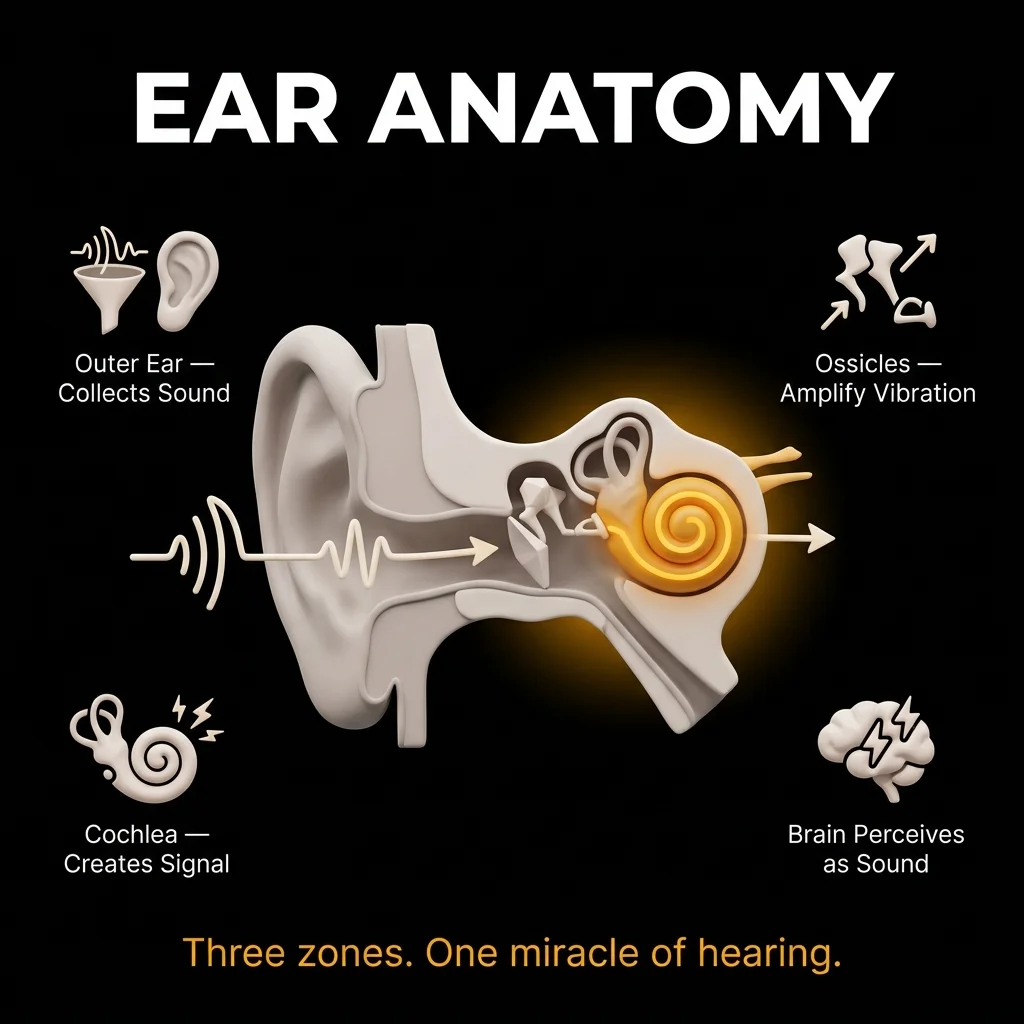
The hearing system consists of three main parts working in tremendous harmony. Each part has an irreplaceable role in the process of perceiving sound and transmitting it to the brain:
Outer Ear: Consists of the auricle (pinna) and the external auditory canal. The primary task of these structures is to collect surrounding sound waves like a funnel and direct them directly to the eardrum (tympanic membrane).
- Middle Ear: Located between the outer and inner ear, right behind the eardrum. The eardrum and the three smallest bones in the human body, the three hearing ossicles (malleus, incus, stapes), are located in this area. Sound waves coming from outside vibrate the eardrum; the ossicles undertake the task of mechanically amplifying this vibration and transmitting it to the inner ear fluids.
- Inner Ear (Cochlea): The region where the electrical parts of hearing take place. There are millions of microscopic auditory (hair) cells and balance system nerve endings within the inner ear fluid. Waves are formed in the fluid by the vibration of the stapes bone in the middle ear. These waves stimulate the nerve endings, turning into electrical impulses perceived as “sound” in the brain.
Degrees and Measurement of Hearing Loss (Audiometry)
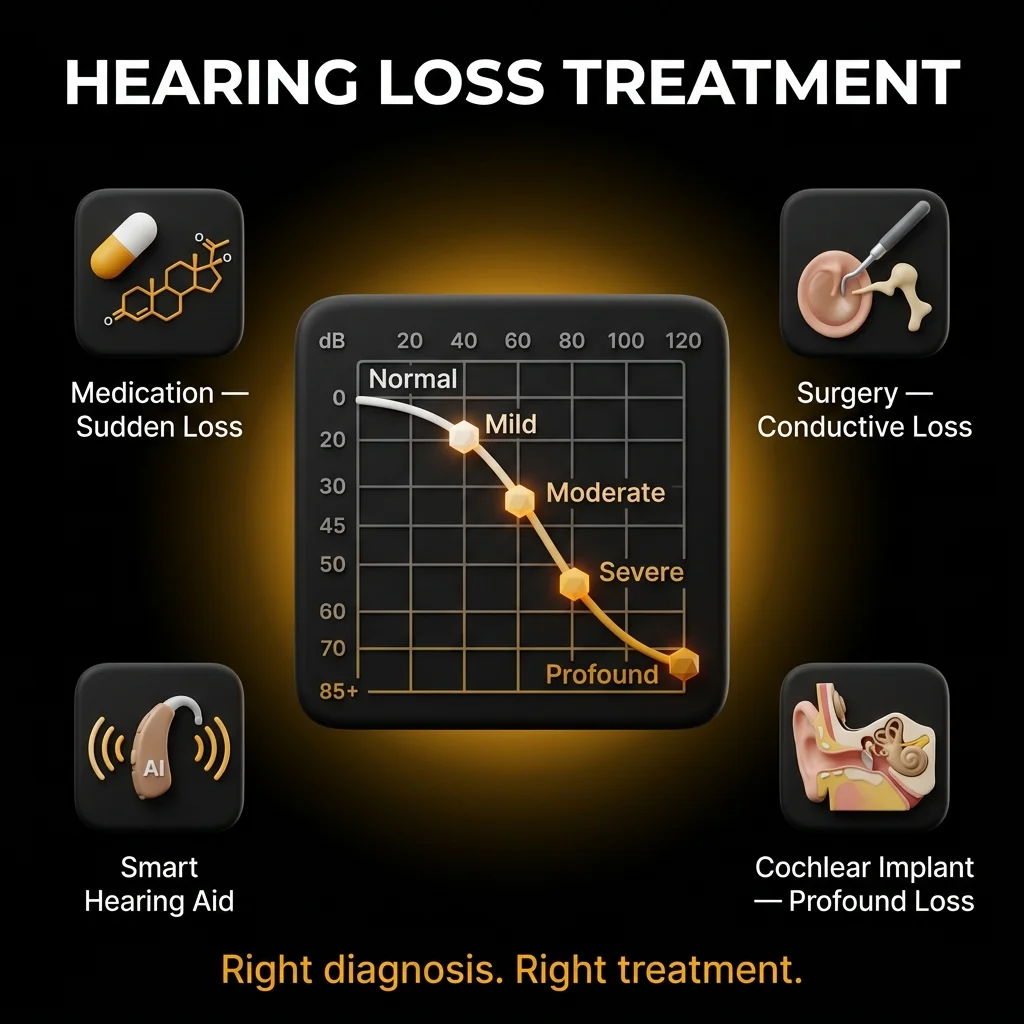
Hearing levels are measured with devices called audiometers and expressed in units of intensity called decibels (dB). For a healthy human ear, hearing levels between 0-20 dB are considered completely normal.
The estimated percentage (%) expression of hearing loss in dB, determined as a result of pure-tone audiometry tests, is as follows:
- 20-25 dB — 0% Loss (Normal limit)
- 30 dB — 8% Loss (Very mild loss)
- 35 dB — 15% Loss
- 45 dB — 30% Loss (Mild-Moderate degree)
- 55 dB — 45% Loss
- 65 dB — 60% Loss (Moderate-Severe degree)
- 75 dB — 75% Loss
- 85 dB and above — 90% and above Loss (Profound degree / Deafness)
Additionally, the Speech Discrimination Score is measured during hearing tests. This score represents the rate of hearing and correctly understanding monosyllabic words. Its normal value should be between 96% and 100% under quiet and ideal conditions. This value drops significantly in sensorineural losses and noisy environments.
Hearing Loss Treatment Methods
The first and most vital step in the treatment process is to determine the exact cause and type of loss through a fully equipped ENT examination and detailed hearing tests (audiometry, tympanometry, etc.). Ear disease specialists plan the most appropriate treatment protocol based on this data.
The selected treatment method is personalized according to the patient’s age, social life, and the degree of loss:
- Medical Treatment (Medication): Cortisone or antibiotic treatments are applied in cases of sudden hearing loss or acute middle ear infections.
- Surgical Intervention (Surgery): These are operations that completely resolve conductive losses, such as eardrum repairs (tympanoplasty), replacement of calcified ossicles with prostheses (stapedectomy), or the insertion of ear tubes.
- Hearing Aids and Bionic Ear: In sensorineural losses that cannot be corrected by surgery or medication, today’s AI-supported smart hearing aids are used. In cases of profound loss, Cochlear Implant (Bionic Ear) surgeries are performed.
- Hearing Rehabilitation: To ensure the brain’s adaptation to newly heard sounds, lip-reading support, hearing training, and speech therapies can be integrated into the process.
Frequently Asked Questions (FAQ)
We have gathered the most frequently asked questions about the treatment and the topics our patients are most curious about for you:
Can hearing loss go away on its own?
Whether hearing loss goes away on its own depends entirely on the underlying cause. If the loss is conductive—caused by earwax buildup, fluid in the middle ear, or a simple infection—hearing typically returns to normal once the blockage is cleared or treated. However, sensorineural hearing loss, which results from nerve damage due to aging or noise exposure, is usually permanent. If you experience sudden hearing loss, it should be treated as a medical emergency; seeking specialist care within the first 48 hours is critical for the possibility of recovery, rather than waiting for it to resolve spontaneously.
What is sudden hearing loss and is it treatable?
Sudden Sensorineural Hearing Loss (SSHL) is a rapid loss of hearing, usually in one ear, that occurs over a period of 72 hours or less. This is considered a medical emergency. Treatment is available, and the key to success is immediate intervention. The gold standard of treatment involves high-dose corticosteroids (administered orally or via intratympanic injections behind the eardrum) to reduce inflammation. Other options include vasodilators to improve blood flow and hyperbaric oxygen therapy. If treatment begins within the ‘golden window’ of the first 24–72 hours, the chances of full recovery are significantly higher.
Is tinnitus a sign of hearing loss?
Yes, in approximately 90% of cases, tinnitus is a direct symptom of underlying hearing loss. When the delicate hair cells in the inner ear are damaged, the brain stops receiving the normal signals it expects from certain frequencies. To compensate for this auditory deprivation, the brain becomes hyperactive and creates ‘phantom sounds’ to fill the gap, which we perceive as ringing. Therefore, tinnitus is often the brain’s way of trying to make up for what it can no longer hear. Anyone experiencing persistent ringing should undergo a professional audiometric test to rule out or manage hearing loss.
What happens if I don't wear a hearing aid?
While wearing a hearing aid is not legally mandatory, it is medically essential for your brain health and overall quality of life. When hearing loss is left untreated, a process called auditory deprivation begins; the brain gradually loses its ability to process certain sounds, making it harder to understand speech over time. Furthermore, clinical studies have linked untreated hearing loss to an increased risk of cognitive decline, dementia, and social isolation. By not using a prescribed device, you force your brain to work harder to listen (increased cognitive load), which can lead to exhaustion and a withdrawal from social activities.
Does an audiometry (hearing test) hurt?
No, an audiometry (hearing test) is a completely painless, non-invasive, and comfortable procedure. It does not involve any needles, medications, or surgical intervention. During the test, all you need to do is sit in a soundproof booth and listen to tones at various frequencies through specialized headphones. You will simply be asked to press a button whenever you hear even the faintest sound. The procedure takes about 15–20 minutes and is a stress-free process that provides accurate data about your hearing health.

Op. Dr. ALİ OĞUZ DEMİR
Otolaryngologist (ENT Specialist)
Following his specialization training, Dr. Ali Oğuz Demir has performed over 500 rhinoplasty surgeries. He holds a National Certificate of Professional Competence, has completed theoretical and practical training at the School of Facial Plastic Surgery, and has international clinical and observational experience from Dr. Yves Saban’s clinic in France.
Take the First Step for a New Beginning!
Clinic Address:
Contact Us
Return to the Rhythm of Life and the Voices of Your Loved Ones
Hearing loss treatment is the most valuable gift you can offer yourself to stay connected to social life and not miss out on life. Meet our expert team to leave behind those invisible barriers that pull you away from conversations and push you into silence, and to step into a happy life where you will hear every word and every melody completely and clearly. You can contact our clinic and schedule a consultation appointment to answer all your questions and create your personalized treatment plan. We are here to help you and support you in your journey of returning to the world of sounds!