


Bichectomy (Hollywood Cheek Surgery)

Nowadays, the perception of aesthetics and beauty is constantly evolving. While rounder and fuller facial features were preferred in the past, today, sharp and clear facial features in a “V” shape, with prominent cheekbones and an inverted triangle form, are considered symbols of aesthetic perfection. The most effective and permanent way to achieve this look, which is frequently preferred by Hollywood stars, is the Bichectomy (Cheek Thinning) operation.
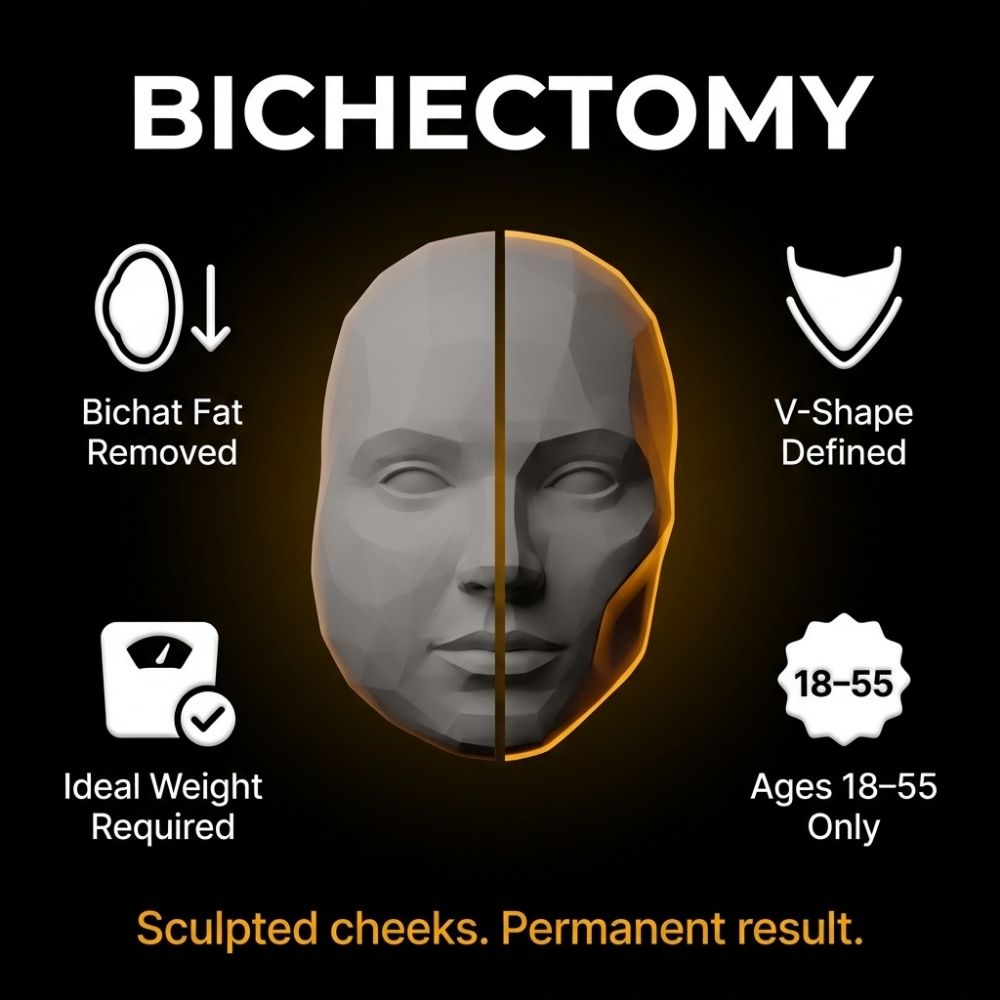
Bichectomy is the procedure of removing excess fat tissue in the cheek area (Bichat fat pads) through a small incision inside the mouth to give the face a thinner, more oval, and attractive form. If you complain about stubborn cheek fat that does not melt even when you lose weight and want to have more sculpted facial features, you can find all the details regarding the bichectomy operation on this page.
What is Bichectomy (Cheek Thinning)?
Bichectomy, also known colloquially as Hollywood Cheek Aesthetics, is the surgical removal of “Bichat” fat pads located in the lower part of the cheeks that give the face a chubby expression.
Even if some people are structurally at their ideal weight, they may appear heavier and round-faced than they actually are due to the dense fat mass in their cheek area. Bichectomy, which permanently eliminates this disproportionate and youthful appearance, defines the cheekbones, reveals the jawline, and adds a much more sophisticated and aesthetic shadow play to the face.
Who is a Suitable Candidate for Bichectomy?
Although bichectomy is a relatively simple and comfortable procedure, it can lead to undesirable results when performed on individuals whose facial anatomy is not suitable. Therefore, patient selection is extremely critical.
Ideal candidates for bichectomy:
- Those whose cheeks are structurally full, thick, and round,
- Those who want to thin their facial features and highlight their cheekbones,
- Individuals who are close to their ideal weight but whose facial fullness remains despite losing weight.
Who is bichectomy not performed on?
- Those under the age of 18: It is not applied because facial bone and fat tissue development is not yet complete.
- Those who are overweight or have obesity problems: Since weight fluctuations will change facial features, it is expected to reach the ideal weight first.
- People aged 55 and over: Fat tissue in the cheek area naturally decreases (volume loss occurs) with aging. Performing bichectomy at older ages can lead to an excessively gaunt appearance of the face and signs of premature aging.
- Pregnant women, breastfeeding mothers, and those with chronic conditions that prevent receiving general or local anesthesia.
How is Bichectomy Surgery Performed?
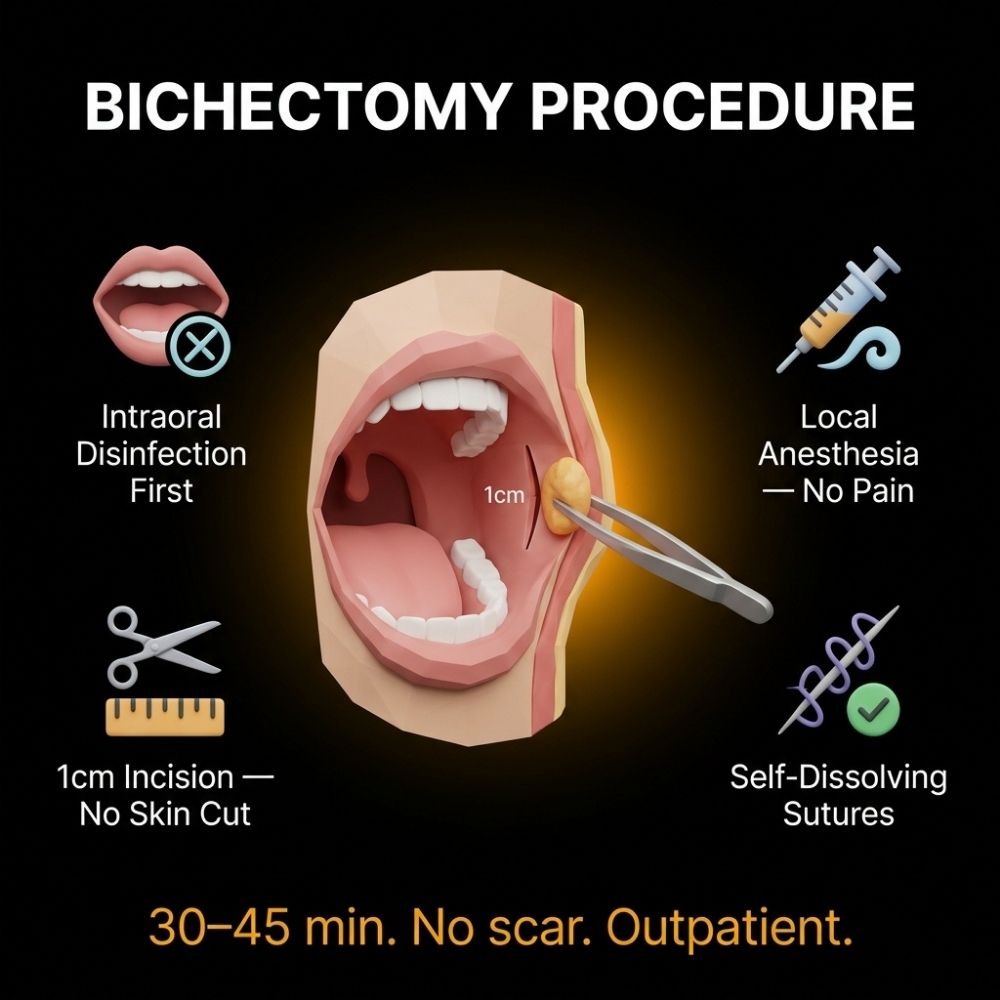
Bichectomy is a practical aesthetic intervention performed as an outpatient procedure that does not require hospitalization. The procedure is generally performed under local anesthesia, where only the specific area is numbed for the patient’s comfort. However, in cases where the patient experiences extreme anxiety, sedation or general anesthesia may also be preferred.
Step-by-Step Operation Process:
- Preparation and Hygiene: To prevent any infection during the procedure, detailed intraoral cleaning and disinfection are performed first.
- Anesthesia: The insides of the cheeks are completely numbed with local anesthesia, ensuring the patient feels no pain or discomfort during the operation.
- Incision: The surgeon makes a very small incision of approximately 1 cm from inside the mouth (buccal mucosa). No intervention is made to the skin from the outside.
- Removal of Fat Tissue: With the help of special surgical instruments (forceps), the Bichat fat pads are carefully removed in an amount suitable for the patient’s facial anatomy. The amount of fat to be removed is meticulously adjusted to ensure both cheeks look symmetrical and natural.
- Suturing: After the excess fat is removed, the incision inside the mouth is closed with self-dissolving (absorbable) sutures.
This entire process is usually completed in a short period of 30 to 45 minutes.
Things to Consider Before the Operation
Small precautions you take before a bichectomy will ensure your recovery process is much more comfortable and complication-free:
- Alcohol and smoking must be discontinued 1 week before the operation. Smoking significantly slows down tissue healing.
- Blood thinners such as aspirin, and herbal supplements that may increase bleeding, such as Vitamin E and green tea, should be discontinued at least 1 week before the procedure under a doctor’s supervision.
- Any existing chronic conditions and all medications used regularly must be reported to the doctor during the examination.
What to Expect During the Post-Operative Recovery Process?
Although the recovery process after a bichectomy varies from patient to patient, it is generally quite fast and comfortable. Patients can return home immediately after the procedure. Tissues largely heal within an average of 14 days.
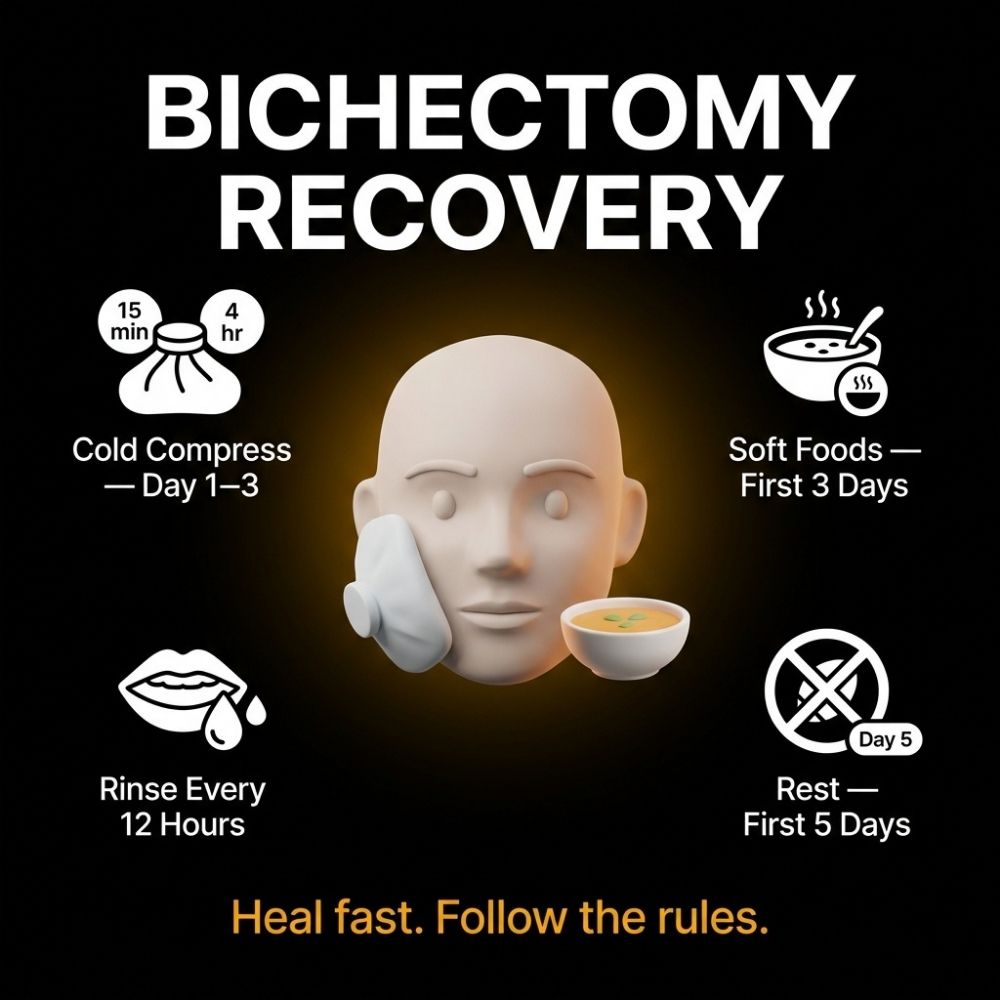
Golden rules you should follow:
- Cold Compress: Applying a cold press (ice) to the outside of the cheeks for 15 minutes every 4 hours during the first 3 days after surgery will minimize potential swelling (edema) and bruising.
- Dietary Regimen: To avoid straining the chewing muscles and damaging the incision sites, soft and lukewarm/cold foods such as soup, puree, and yogurt should be consumed for the first 3 days. Hot and spicy foods should be avoided.
- Oral Hygiene (Very Important): Since the incision is inside the mouth, it carries a risk of infection. For 7–10 days after the procedure, the inside of the mouth should be cleaned with the mouthwash recommended by your doctor or saline water after every meal and in the morning/evening (every 12 hours).
- Physical Activity: Heavy sports, tasks requiring excessive effort, and leaning the head forward should be avoided during the first 5 days after the operation. You can return to your normal daily activities at the end of the 5th day.
Frequently Asked Questions (FAQ)
We have gathered the most frequently asked questions about the treatment and the topics our patients are most curious about for you:
Is buccal fat removal permanent?
Yes, the results of buccal fat removal (bichectomy) are considered permanent. Once the buccal fat pads are surgically removed, they do not regenerate or grow back. While the fat is gone for good, it is important to remember that your facial appearance can still change over time due to the natural aging process or significant weight fluctuations.
How long does it take to see results after buccal fat removal?
Results of buccal fat removal are not visible immediately due to post-operative swelling, which temporarily masks the new contours of your face. While you may begin to notice a slimmer appearance within 2 to 4 weeks as the edema subsides, it typically takes 3 to 6 months for the tissues to fully heal and for the final, more defined facial contours to become apparent.
Does buccal fat removal leave visible scars?
No, buccal fat removal does not leave any visible scars on the outside of your face. The procedure is performed entirely intraorally, meaning the small incisions are made on the inside of your cheeks. Since no external incisions are required, there is no visible scarring or marks on the skin, making the results look completely natural once the healing process is complete.
Is buccal fat removal painful?
The buccal fat removal procedure is typically performed under local anesthesia or sedation, meaning you will not feel any pain during the surgery itself. During the recovery period, most patients describe the sensation as mild soreness or tightness, similar to the discomfort felt after a minor dental treatment. Any post-operative discomfort can be easily managed with standard pain relievers prescribed by your surgeon.
Will buccal fat removal cause my face to sag or age prematurely?
When performed by an expert surgeon on the right candidate, buccal fat removal does not inherently cause sagging. However, because facial fat naturally diminishes as we age, removing too much volume can potentially lead to a gaunt or hollowed appearance later in life. This is why a thorough facial analysis and assessment of skin elasticity are crucial before the procedure to ensure the results remain harmonious and youthful over time.
Do stitches need to be removed after buccal fat removal?
In most cases, dissolvable (absorbable) sutures are used during a bichectomy, so there is no need for manual stitch removal. These stitches typically dissolve and fall out on their own within 7 to 14 days, aided by the natural moisture in the mouth. Maintaining excellent oral hygiene and using the prescribed antiseptic mouthwashes during this time is essential for a smooth recovery.

Op. Dr. ALİ OĞUZ DEMİR
Otolaryngologist (ENT Specialist)
Following his specialization training, Dr. Ali Oğuz Demir has performed over 500 rhinoplasty surgeries. He holds a National Certificate of Professional Competence, has completed theoretical and practical training at the School of Facial Plastic Surgery, and has international clinical and observational experience from Dr. Yves Saban’s clinic in France.
Take the First Step for a New Beginning!
Clinic Address:
Contact Us
Achieve an Elegant, Slender, and Proportional Facial Shape
The decision to undergo Hollywood Cheek aesthetics is one of the best investments you can make in yourself to feel happier with your reflection in the mirror. Meet our expert team to leave behind the round contours that make you look heavier or more childish than you are, and to step into a much more sculpted and defined appearance. You can contact our clinic and schedule a consultation appointment to answer all your questions and create your personalized treatment plan. We are here to help you and support you throughout this exciting process!