


Ear Aesthetics (Otoplasty) and Prominent Ear Surgery

Ears that are too large in proportion to the face, asymmetrical, or projecting at a prominent forward angle (commonly known as “prominent ear” appearance) can cause individuals to experience significant psychological and social challenges during both childhood and adulthood. In particular, the loss of self-confidence and introversion experienced during childhood can leave lasting emotional marks.
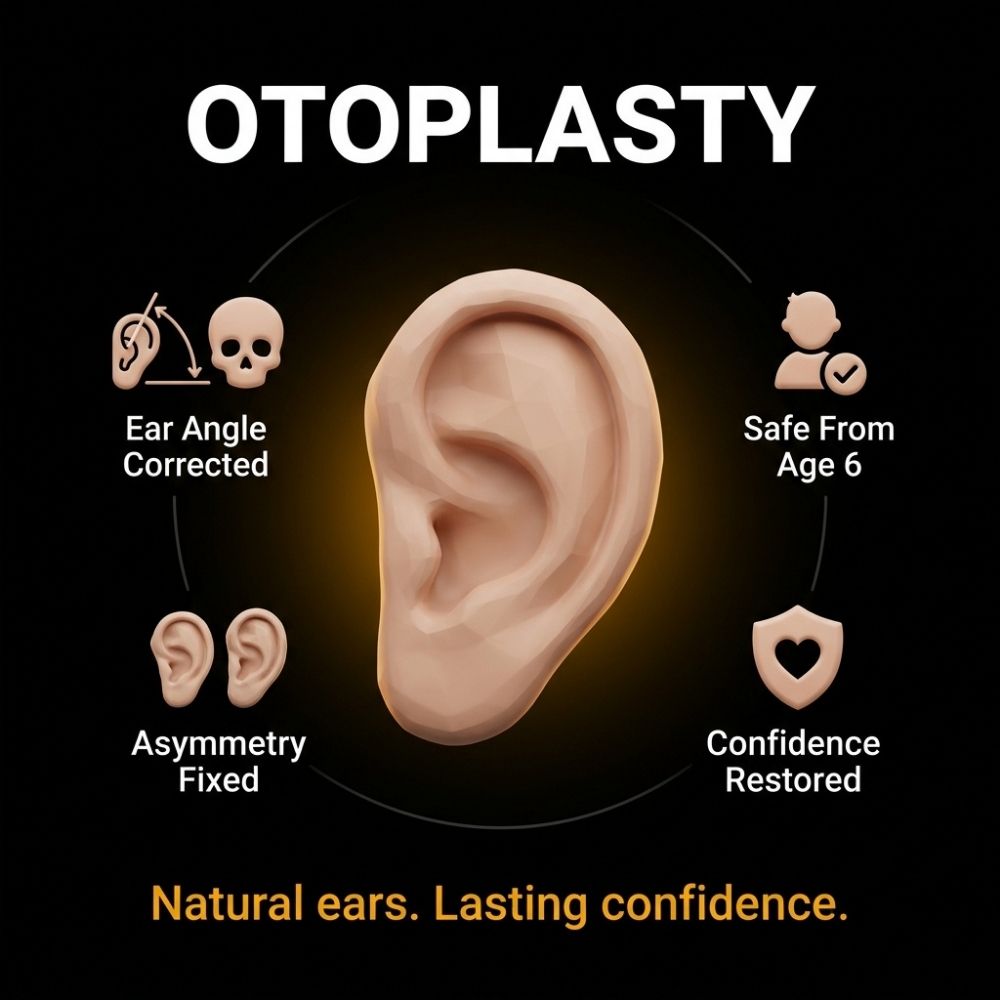
Ear aesthetics, medically known as Otoplasty, encompasses modern surgical procedures performed to permanently and safely resolve these aesthetic concerns and provide the ears with a natural angle that is in harmony with the rest of the face.
On this page, we detail the processes involved in ear aesthetics, the recovery period, and the answers to all your questions from an expert physician’s perspective.
What is Ear Aesthetics (Otoplasty)?
Otoplasty is an aesthetic surgical intervention performed to correct the appearance of prominent, forward-angled ears, address deficiencies in the cartilage structure, or repair various deformities (resulting from trauma or congenital anomalies). The primary goal of the surgery is to narrow the angle between the ear and the skull and to provide the ear with a more aesthetic form characterized by natural contours.
Who is a Suitable Candidate for Ear Aesthetics?
Anyone whose general health status is suitable for surgery can undergo this operation. Individuals with the following characteristics benefit most from the otoplasty procedure:
- Those with outward-angled ears, known as the prominent ear appearance (this is the most frequent ear intervention in aesthetic surgery).
- Those with ears that are disproportionately large (macrotia) or small relative to their facial features.
- Those with “flat” ear structures where the cartilage folds (especially the antihelical fold) are insufficiently developed.
- Those with ear deformities resulting from a past accident, trauma, or tearing.
Those experiencing ear asymmetry (where the two ears differ significantly in appearance).
Surgery Timing in Children and Adults
The auricle (ear flap) is one of the organs that completes its development earliest in the human body. By the age of 6, the ear reaches approximately 90% of its adult size and shape. Therefore, prominent ear surgery can be safely performed on children who have completed their 6th year.
Parents often prefer this operation just before their children start primary school to prevent them from being exposed to peer bullying (teasing or exclusion) and the resulting self-confidence issues. On the other hand, there is no upper age limit for adults who did not have the opportunity for this surgery during childhood. You can rid yourself of this aesthetic and psychological burden at any age.
The Otoplasty Procedure and Techniques
Before your ear surgery, you will meet with your doctor for a comprehensive consultation to discuss your aesthetic goals and the details of the procedure. During this examination, the ear structure that best complements your facial features is carefully planned.
How is the Surgical Procedure Performed?
In prominent ear surgery, multiple techniques may be combined depending on the patient’s unique anatomical needs:
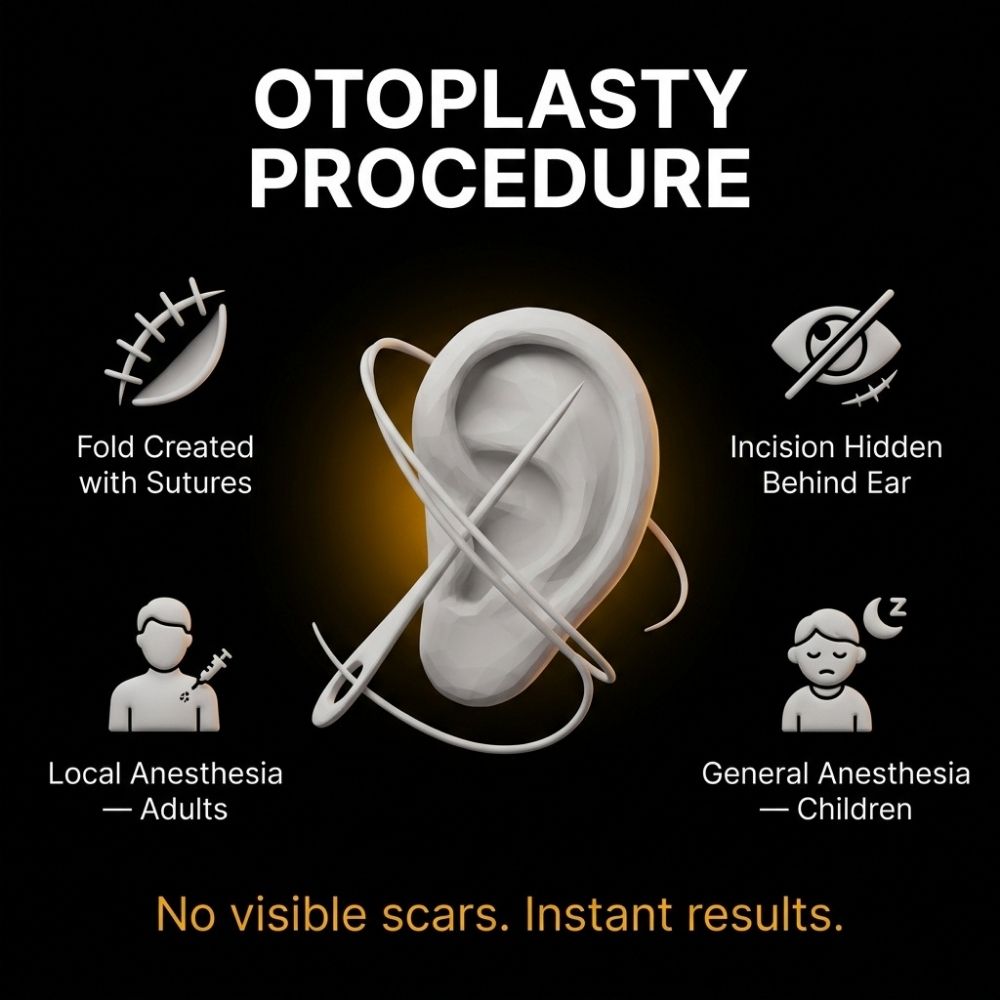
- Cartilage Reshaping: The missing fold at the front edge of the ear (antihelical fold) is created or emphasized using specialized sutures.
- Cartilage Reduction: If the bowl-shaped cartilage in the inner part of the ear (concha) is excessively large, it is narrowed by aesthetically removing a small amount of tissue.
- Incisions and Scar Concealment: All necessary incisions for these procedures are made directly behind the ear. This ensures that no surgical scars are visible from the outside.
- Closure: Permanent internal sutures are placed to secure the cartilage in its new position. The skin incision behind the ear is then closed with aesthetic, self-dissolving, or easily removable sutures.
The magnificent results of the intervention for prominent ears become instantly visible as soon as your bandages are first removed following the surgery.
What Type of Anesthesia is Used in Otoplasty?
The type of anesthesia is determined based on the patient’s age and overall health status:
In Adults: The procedure is typically performed under local anesthesia (sometimes combined with mild sedation). Only the ear area is numbed, allowing the patient to remain fully awake without feeling any pain.
In Children: General anesthesia is usually preferred to ensure the child remains still, comfortable, and free from any anxiety during the procedure.
What Should You Consider Before Surgery?
- Medical History: If you have any issues regarding bleeding disorders or if you use medication regularly, you must inform your doctor during the examination.
- Blood Thinners: At least 7 days before surgery, the consumption of blood-thinning medications such as aspirin, Vitamin E supplements, and herbal products that may increase bleeding—such as green tea, cherries, and sour cherries—must be stopped.
- Smoking: To accelerate the healing process, it is recommended to take a break from smoking both before and after the operation.
Recovery Process After Otoplasty: What to Expect?
- The First 24 Hours: After the surgery, your ears are covered with a pressure bandage. A slight throbbing, swelling, and mild aching may be felt; these are easily managed with pain relievers prescribed by your doctor. Severe pain is not expected.
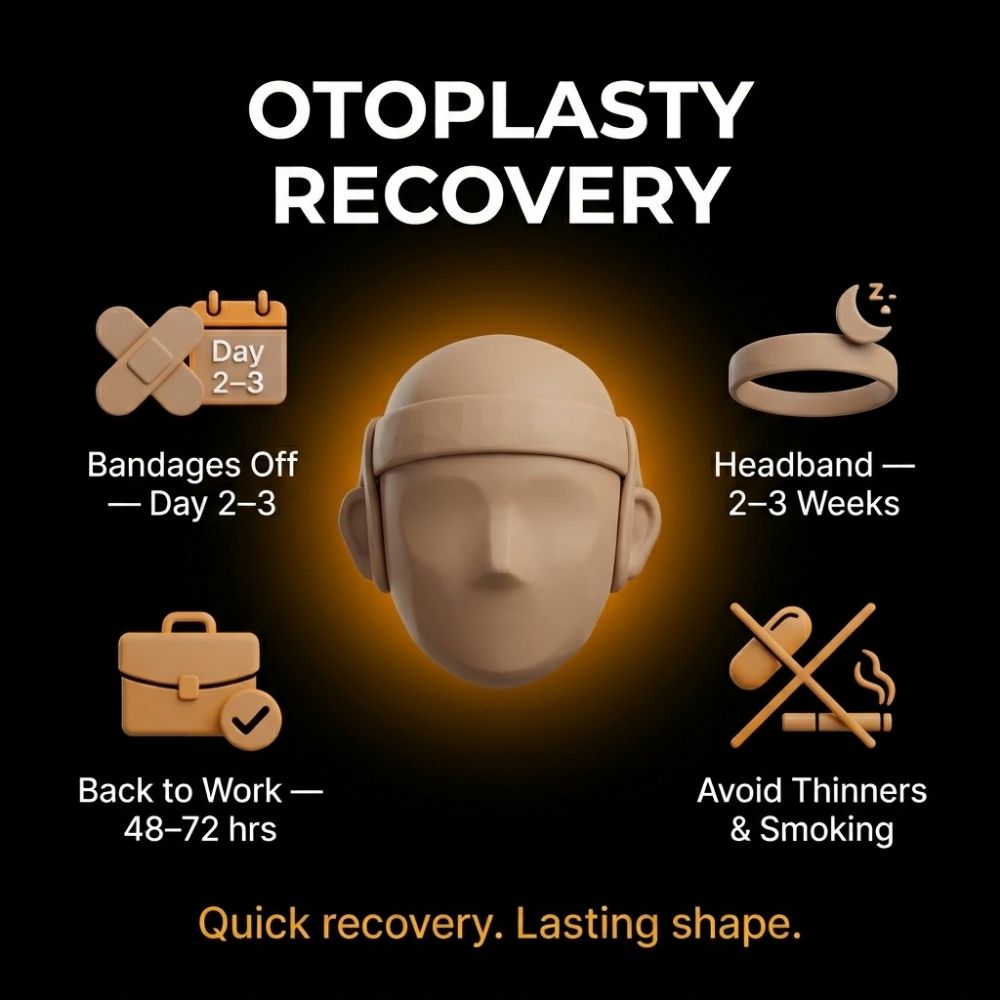
- Removal of Bandages: On the 2nd or 3rd day, your first dressing change is performed at our clinic, and the bandages are removed.
- Use of a Headband: Once the bandages are removed, you will be asked to wear a headband (sports/tennis headband) to support the ears in their new position and prevent them from inadvertently folding during the night. It is generally recommended to wear it continuously for the first 2–3 weeks, and then only while sleeping for the following few weeks.
- Return to Daily Life: Patients can usually return to work or school between 48 hours and 3 days after the surgery.
- Exercise and Activities: By the end of the first month, you can return to all normal activities, including sports that do not carry a risk of impact to the ears.
Frequently Asked Questions (FAQ)
We have gathered the most frequently asked questions about the treatment and the topics our patients are most curious about for you:
How long does prominent ear surgery (otoplasty) take?
The procedure typically lasts between 1 to 2 hours, depending on the complexity of the ear structure and the specific techniques used.
Do ears go back to their original position after otoplasty?
The results of prominent ear surgery are generally permanent. While a very slight “relaxation” or widening may occur in rare cases as the cartilage heals and settles, the ears will not return to their original prominent state when performed correctly.
Is non-surgical (thread) otoplasty permanent?
Thread otoplasty is generally considered less permanent than traditional surgical otoplasty. Since the cartilage is not surgically reshaped or weakened, it exerts constant pressure on the threads. Over time, there is a risk of the threads loosening, breaking, or “cutting through” the tissue, which may cause the ear to partially or fully return to its original position. While it offers a quick recovery, it does not provide the same lifelong structural stability as surgical methods.
Is prominent ear surgery (otoplasty) painful or a difficult procedure?
Otoplasty is generally a comfortable and straightforward procedure. No pain is felt during the surgery due to anesthesia. Post-operative discomfort is typically mild and easily managed with standard pain relievers. It is considered a safe and highly successful operation when performed by an experienced specialist.
Will there be a scar after otoplasty?
No visible scars remain. The incision is strategically placed behind the ear within the natural skin fold, making it virtually invisible from the front or side. Over time, the faint scar fades significantly and blends naturally with the skin.
When can I shower after prominent ear surgery?
You can typically shower 2 to 3 days after the procedure, once your initial bandages are removed. It is important to keep the surgical area dry until your doctor gives approval during the first follow-up.

Op. Dr. ALİ OĞUZ DEMİR
Otolaryngologist (ENT Specialist)
Following his specialization training, Dr. Ali Oğuz Demir has performed over 500 rhinoplasty surgeries. He holds a National Certificate of Professional Competence, has completed theoretical and practical training at the School of Facial Plastic Surgery, and has international clinical and observational experience from Dr. Yves Saban’s clinic in France.
Take the First Step for a New Beginning!
Clinic Address:
Contact Us
Achieve the Natural Appearance and Self-Confidence of Your Dreams
Deciding on ear aesthetics is one of the best investments you can make for yourself. Meet our expert team to both fulfill your aesthetic expectations and step into a new chapter where you will attain a natural look perfectly in harmony with your face. To answer all your questions and create your personalized treatment plan, you can contact our clinic and schedule a consultation. We are here to assist you and stand by your side throughout this exciting journey!